Meaning of User Generated Content
User-generated content (UGC) implies the written or multimedia content associated with your brand. Generally, this content is created by someone who is unofficially affiliated with your firm or business.
You can directly connect your brand with customers via user-generated content, such as social media integration, product reviews, FAQ’s, and discussion boards. This authentic content is socially interracial, personalized, insightful, and understandable. Best of all, it helps in building trust with consumers and ultimately translating into the success of the business and scalable growth.
In a jam-packed eCommerce business, securing third-party credibility is key to creating the trust of the consumer. Brands utilizing user-generated content display authenticity and typically generate more certain acknowledgments from consumers.
Benefits of eCommerce user-generated content incorporate:
- Developing trust
- Manifesting real-life practicality
- Boosting conversions
- Enhancing organic search results
- Fetching leads to your website
- Generating a stronger social following
- Providing free marketing content
Types of User-Generated Content:
Customer Reviews

With customer trust at an all-time low rate, third-party reviews allow the notable possibility for achievement to the businesses looking forward to making an online impression. 82% of consumers find user-generated product reviews to be extremely beneficial and 70% of consumers consider ratings or reviews before initiating any purchasing decisions.
Consequently, brands incorporating reviews within product pages can support their reliability and encourage customers to purchase. Just like Amazon has done a fabulous job, including optimized product reviews in its content marketing plan. Possible customers can give product star ratings, along with chatting with other users through Amazon’s customer Q&As. This two-way interaction level supports brands personally connect to consumers and build trust. If you are still just considering adding consumer reviews to your website, then we highly recommend you delve into this option.
Social Media Content & Influencer Marketing

Social media and influencer marketing is one of the most renowned types of user-generated content. These platforms are very profitable and successful because they advertise real-life apps of goods and services. Moreover, they extend the range of content to distinct networks and accommodate brands to engage with new possible customers.
For instance, let us suppose you run a furniture store and you want to exhibit different items to your customers. Merging images from your Instagram account on product pages can give an idea to the potential buyers about how the pieces of furniture can be used in everyday settings. These kinds of posts recount a story of positive customer experiences, helping purchasers to visualize themselves using your products. Furthermore, brands can take advantage of hashtags and influencer connections to source additional exclusive content onto their product pages and feeds.
Effective UGC campaigns utilize customer photos to deliver a lifestyle and not merely a product. Even though Instagram is debatably the biggest platform for photography marketing, we advise exploring other platforms also based on your business.
Multiple brands have also seen success in running advertisements or incentives to promote social sharing. If you practice this approach, don’t forget to incorporate hashtags and ask your customers to tag your business in their posts so more people can find the content.
FAQ Forums & Discussion Boards

Although this sort of UGC doesn’t pertain to all businesses, it can benefit particular brands to increase the confidence of the customer. In many cases, FAQ content becomes a brand-created page. However, costumer-accessible FAQ forums and discussion boards give an excellent opportunity to immediately connect with existing and likely customers.
Designing public FAQ forums and discussion boards enables consumers to share real-life tales and opinions, resulting in increased confidence of potential buyers. Additionally, this approach aids marketers to pay less time constantly updating FAQs pages because customers take on most of the lift. If you choose FAQ forums as a kind of eCommerce user-generated content, we recommend you to actively watch over these pages for remarks and complaints. Brands should utilize this opportunity to connect personally, address concerns, and build positive experiences, encouraging repeat conversions. We suggest using Aframark if you are looking for some real syndicating Q&A solution for eCommerce.
Technology

Although there are numerous user-generated content apps in the market, we’ve discovered that Yotpo is one of the most popular and influential choices for eCommerce businesses. This platform “integrates with leading eCommerce platforms and apps to generate and maximize the power of user-generated content.”
Especially, Yotpo improves display Q&A, reviews, ratings, and images at key conversion points across your website and social media accounts. Also, Yotpo’s AI-powered resolutions leverage and accumulate ratings and reviews to transform consumer content into sales conversions. Ultimately, customizable widgets drive buyers to write reviews on-site. In general, this tool helps the clients to centralize their eCommerce user-generated content applications and boost return on investment.
Conclusion
There is no secret method or formula that will serve for every business. But, accurately implementing user-generated content can spread your brand for the long-term, increase customer lifetime value, lowering the cost of purchase and increase other traffic-driving actions. If you still haven’t explored this marketing plan yet, then you must carry on your research mission and learn more about it.
If you need more information regarding UGC, then contact our expert team and we’ll willingly answer any questions you may have.
What is eCommerce Copywriting?
Copywriting has traveled a long distance since the “big idea” times of the Mad Men era. It is the art and technique of strategically drafting and publishing reader-focused words online that compel the browsers to take some action.
Today’s copywriting requires a proper plan and creativity. However, for an eCommerce website, it ultimately summarizes two key factors, i.e., brand consistency and SEO.
Both factors are equally essential, each requiring unique skills and tactics to succeed. In this post, you’ll read performance items to promote your website copy, pull new website visitors and boost conversions.
Product Detail Pages
You should understand who you are writing for, before you start drafting your product copy. To begin with, define the personality of your ideal customers and identify their needs or distress points they are looking forward to resolving.
Convincing product descriptions directly answer the questions maintaining a sense of personality. Remember that your speech and tone should align with your overall brand. For that consider how you would speak to a customer in an in-person setting. The authenticity of product detail pages can help retailers to distinguish themselves from big-box online distributors.
Besides adding personality, be sure to incorporate the best SEO practices in your product detail pages. For instance, we suggest adding a target keyword on the succeeding regions of your product detail page:
- Page Title
- Image Name
- H1
- URL
- Alt Text
Be mindful and avoid keyword stuffing. Above everything else, write your page for humans and not for search engines. You’ll line up with Google’s SEO recommendations and improve the probability of ranking on following this approach.
FAQ Pages

FAQ pages offer one of the highest SEO opportunities for online traders because they are directly related to the search queries. If implemented accurately, FAQ pages and various sections in it can help boost organic website traffic and enhance the user experience.
We suggest commencing the process of writing by listing out five-to-ten inquiries that often show up in customer support queries. You can include obvious questions also that you acknowledge your buyers will look for, as shipping and exchange information.
Once you’ve chalked down the questions you require to answer, it’s time to format them carefully. Use the checklist given below to get started:
Write your inquiries with understandable heading tags. Typically, with an H2 tag, when you are designing a separate FAQ page. However, tagging the queries with an H3 or H4 will also work fine.
Formulate your answer in a line or two. If you want more room for your answer then, we recommend having an introduction to your reply that might serve as a summary with a more detailed description that follows. Search engines can easily extract your summary rich snippets into search results.
To boost the likelihood of rich snippets cropping up in organic search results, we also suggest incorporating question format schema data on your page. After customizing the codes, you can place it at the top of your body section.
Category Pages
Category pages create eCommerce copywriting difficulties because they seldom include sections for the copy. However, we’ve discovered that incorporating selection related content can improve page personality and search rankings.
As shown in an instance given below in the image, West Elm does a great job of incorporating added text at the bottom of its each category page without going overboard in keyword stuffing.

About Pages
Although the About page appears like a matter of lesser priority, it gives an excellent opportunity to highlight everything that makes your brand exceptional. People want to understand why they should purchase from you, and this is what these pages provide space for, to say clearly, “This is who we are.”
We suggest keeping these pages precise and short. However, brands should take the necessary time to craft a well-constructed tale that attracts users through their history and the purpose of their business. You can also add content, like overview videos, to create a great user experience.
If you’re unclear about where to start from, then, try introducing a noteworthy overview of your firm, purpose, vision, any honors, testimonials or press remarks.
Conclusion
In general, a properly executed eCommerce copy helps a lot in capturing a buyer’s attention and lead them through the shopping process. We hope you’ve found the above suggestions to be helpful.
We would love to gather your views or remarks about this blog. Please reach out to the comments segment below.
Omni-channel is a multi-channel strategy to commerce that seeks to present customers with a seamless purchasing experience, whether they’re buying online from a desktop or mobile device or in a brick-and-mortar shop.
It is essential to develop an omnichannel supply chain strategy to remain at the top position in this era of immense competition. And for that, you have to facilitate both order fulfillment and returns through multiple places and means, such as in affiliate brick-and-mortar retail shops or through digital stores. Not only that it gives a better nearby experience for the customer, but also it generates additional revenue opportunities that otherwise you might fail to grab. If executed properly, this positive experience can build customer loyalty and create repeat purchases.
However, providing multiple channels to purchase, collect, and return products unavoidably adds complexity to your current methods and systems. According to Multichannel Merchant, although 91% of merchants of the US presently have an omnichannel plan of action in place and less than 10% of those brands or retailers claim to have mastered the omnichannel strategy and technology.
Let’s explore four key areas of focus to guarantee a robust implementation of your omnichannel strategy.
1. Simplify inventory management

The tracking of the product and management of the inventory becomes more complicated since products are delivered and returned in different ways than before, affecting the demand planning. Thus, investing in a warehouse management system (WMS) for your operations can be an essential tool in enabling your omnichannel strategy. Implementing or remodeling your system will provide you the most detailed, up-to-date data to track the patterns of your product demand so that you can easily manage the placement of your inventory.
2. Increase order speed and accuracy
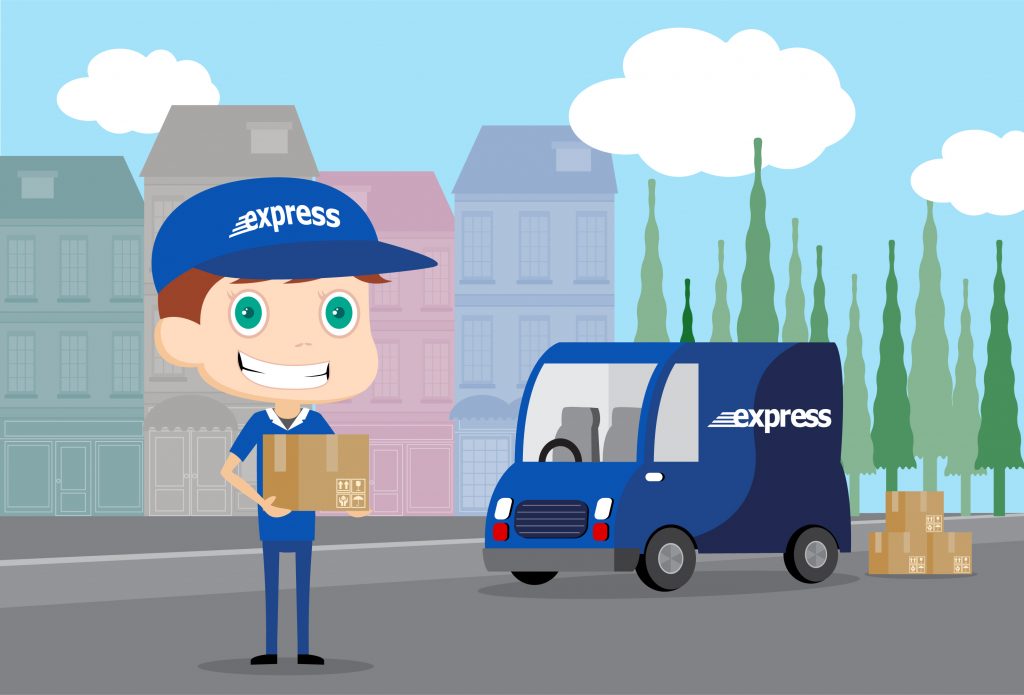
Along with the prevalence of the establishment of omnichannel, the needs of the consumers are also growing. While considering the changes you require to make in your services to meet the rising expectations of the consumer, you must not forget to consider how to enable speedy and punctual delivery. Over the past decade, eCommerce delivery times have reduced from 5 to 2 days, and now, next-day or same-day delivery has become an emerging delivery trend in the market. To survive in the competition and keep up the pace with consumer demands, your operation requires finesse. So you need to adopt new technologies like voice commands, pick-to-light, and automated transportation systems to set your business apart.
3. Optimize operations

Workforce optimization and warehouse design bring efficiency to your overall performance. Effective design means a reduction in picking time as products are arranged rationally throughout the facility. It can even avert you from unnecessarily extending your real estate footprint. Recruiting and employing a highly trained team is crucial while implementing new technologies. Prioritize forming your industrial engineering and human resource expertise within or through experienced 3rd parties with a verified track record for office optimization, workforce recruitment, and development programs.
4. Enable easy returns

With the growth of eCommerce and a subsequent increase in returns, end consumers are asking for an easy return method. Merchants often struggle to create reverse logistics capabilities to meet the expectations of a consumer. Handling returns is complex and can be expensive due to additional shipping charges, integrated IT systems, repetitive processes, and credit-processing capacities, but the investment can pay off in the form of the loyalty of a customer. The analysis shows that around 89% of online shoppers determine where they would shop from based upon the return policies of a merchant, and 70% of the shoppers purchase something else while returning items in a store.
Conclusion
Working with a professional third-party logistics (3PL) firm can be the best and the safest way to implement and handle the intricacies of an omnichannel strategy. The right 3PL will help you to develop the best-fitted approach for your business and will leverage technology to assist your business requirements. The competence of a 3PL can accommodate you to get the maximum out of your warehouse space, maintain current and future inventory, bring quick and accurate completion of orders, and manage returns cost-effectively.
Are you considering to launch a new online store or switching the existing one to a new platform like Magento? Are you confused between Magento Open Source and Magento Commerce? If the answer is yes, then it’s incredibly essential to comprehend and estimate the total cost of ownership (TCO).
Some of you might be wondering what exactly does TCO mean. Then why not begin with a brief introduction about TCO.
The total cost of ownership is the financial estimate meant to assist buyers and purchasers to decide the direct cost and indirect cost of a system or product. TCO typically entails expenses like Hosting, Platform cost, 3rd party services, Apps or extensions, Support & maintenance, Future feature development, and Future platform upgrades.
With this blog, we aim to introduce you to the essentiality of TCO. Let’s compare the TCO of Magento Commerce and Magento Open Source and stroll you through some of the points to consider while choosing the right tool for your e-commerce business.
First is the cost, which is important for all businesses.
Cost is the immediate thing that sprouts in our mind while starting or purchasing anything. It is even more significant at the beginning of any business. According to the belief of many small-scale companies, open source solutions always offer the least TCO. And it’s accurate also, to a great extent. Opting for open source code is an excellent way to drop software and subscription charges. But TCO is much more than merely the price of your software like support, development, maintenance, merchant control, and a lot more. In various cases, the open source is actually costlier than a packaged solution with built-in flexibility. Especially in the case when comparing Magento Open Source with Magento Commerce.
Second, you need to know how much do you require to develop?
Developer-friendly Magento Open Source and Magento Commerce offer you versatility and access to code regardless of whichever version you’re using. However, Magento Open Source doesn’t give you out of the box solutions like Magento Commerce. For instance, it doesn’t have features like Business Intelligence, Page Builder, content staging, shipping, or B2B, implying that you will have to spend extra with Magento Open Source.
Third, are you considering shifting to the cloud?
The in house servers and networks that you manage are on-premises infrastructure. Most of the new and small businesses cannot bear to have on-premises infrastructure because it is quite expensive to mount and maintain. So, they are opting to use the Cloud to run their e-com platforms because-
- It has minimal upfront costs.
- It allows you to scale up and down your services.
- Big cloud service providers profit from savings of scale and transfer those economies toward you.
- Your cloud service provider usually takes care of most of the upkeeps.
In fact, many large companies are opting to function in the cloud for these specific reasons only. Although both Magento Open Source and Magento Commerce can operate in the cloud, only Magento Commerce Cloud offers built-in multiple cloud services like Fastly, Amazon, etc. i.e., there’s no need to research or manage service providers manually.
Fourth, do you own an IT team? Are they already overwhelmed?
Many flourishing industries have nominal IT departments where the owner often serve as de facto CIO. Beginning with Magento Open Source can be a huge role for such IT folks, requiring both development and IT competence. Keeping codes up to date and performing regular support jobs also requires development and IT expertise. In some cases, using Magento Open Source, you might have to appoint a contractor or expand your IT team. Whereas Magento Commerce offers rich and innovative functionality, making it easier, to begin with, the least resources. Also, you have to pay less on maintenance and upgrades over time if you use Magento Commerce.
Last, would you need any support?
You need support when you face any unexpected problem or are perplexed with questions. Although Magento Open Source provides you access to a community of developers, eventually you are liable for your own support working with an IT team or person. At times dealing with issues can be very time-consuming if your IT contact is occupied with other priorities. In that case, you could employ a team member or contractor who will be solely responsible for eCommerce support. Magento Commerce grants responsive support to quickly solve issues. By spending extra for the support, you will be able to resolve your issues even before they affect your business.
While taking a new present-day approach to eCommerce and thinking about replatforming, be sure to know the total cost of ownership in detail. And then, choose wisely according to your need.
Being aware of the fact that innovations in eCommerce are transforming the domain of online shopping, turning in-person businesses into a relic of bygone days. Corporations are looking forward to finding advanced ways to uplift their client experience and meet the ever-rising demand to grow.
The prominent technological enhancement changing eCommerce for the better is artificial intelligence (AI). This trend of automation enables retailers to use information, endorse products, and target the needs of the client more proficiently. Continue reading to delve into how the development of AI in eCommerce is developing online shopping as we probably are conscious of it.
The technology has unknowingly become an essential part of our daily life. From Google search results to Amazon’s products suggestion and Netflix’s movie recommendations to the bank’s VRU system, there are various tools powered by Artificial Intelligence, that even people who are non-technogeeks also use.
Due to the competence of technology, its use is estimated to grow immensely during the course of the next two years. According to research company Gartner, around 85% of the interactions between firms and customers would be handled by AI rather than humans by 2020.
AI is the prominent technological enhancement changing eCommerce for the better. The trend of automation enables retailers to use information, endorse products, and target the needs of the client more proficiently. Continue reading to delve into how the development of AI in eCommerce is developing online shopping as we probably are aware of it.
Personalized Recommendations
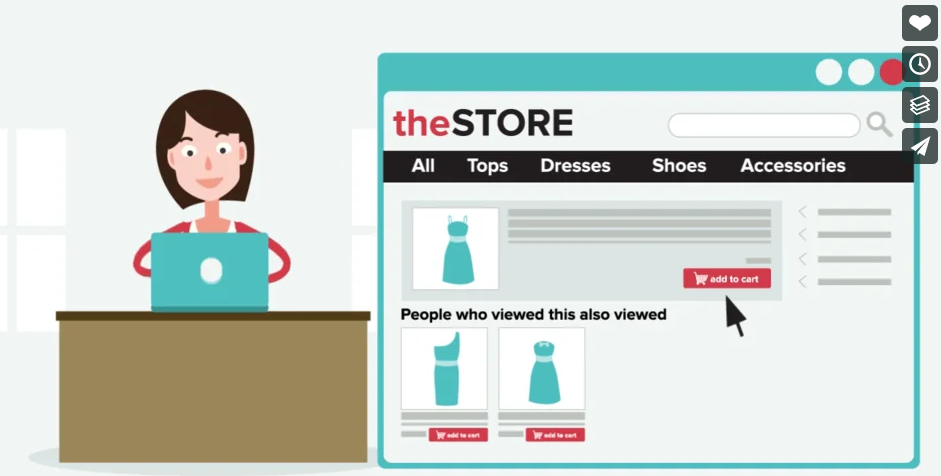
Has it ever appeared to you that your PC knows you better than you know yourself? It has become a common experience since AI technology has entered numerous mainstream sites. You can observe this on Amazon’s internet shopping place where your personalized orders are upfront. Using the information about your past shopping propensities, AI can form intelligent recommendations about similar items that you might be interested in.
Amazon expanded its deals by approximately 30% after introducing customized content to their webpage. We all have fallen for a recommended product, thus creating a dynamic shopping experience for customers and companies both.
In short, you can see the recommendation engine as an intelligent and sophisticated salesperson, who is well aware of the taste of the buyer, making the search engine more intelligent to make decisions and recommendations.
Some of the software like Barilliance, Optimizely, Maropost, Omniconvert, and Pure360 can help your eCommerce sites to boost sales and conversion rates by granting visitors with the personalized omnichannel shopping experience.
Chatbots

People typically depends upon an individual in client support to get answers to their inquiries concerning transportation, items, and requests, which at present even computers can do. Chatbots have evolved as a revolutionary AI technology that responds to questions, helps with requests, and even book reservations.
1-800-flowers, a bouquet specialist is one of the former companies to introduce chatbot making it easy for their clients to get help for their orders through Facebook messenger bot. Also, you can send flowers to your family or friend through it. It’s anything but difficult to use, an incredible option in contrast to the conventional internet shopping background.
As compared to bots, humans are more prone to make mistakes or errors. For instance, a human customer service executive might fail in recording information or browse disclaimers in accordance with laws and auditing requirements. While, on the other hand, chatbots automatically obey all the commands according to their programming. Plus, they also provide auditable tracks for the conversation.
AI and machine learning have transformed the programming of software solutions. Due to which bots can read every conversation and access the historical data of a customer. Thus, the possibilities of giving wrong answers due to the information gap become less. Boston Consulting Group’s research has shown that retailers who have enforced some of the ‘smart’ solutions have reported a 10% increase in their sales.
Some other advantages of chatbots:
- 24×7 availability
- Chatbots can tackle a high number of request
- It accommodates to understand the users accurately
- Low maintenance cost
- Updates customer support services by analytics and data filtering
- Saves a lot of time
You can employ various bot-building platforms like Chatfuel, Botsify, MobileMonkey, and Flow XO to create your own chatbot and interact with your customers, as we have taken the support of Tawk.to in building our chatbot.
Stronger Websites

AI tech serves the websites to perform at a higher level. Earlier, the companies could escape with a site that doesn’t operate properly but, today it’s a different story. The users are savvier than ever before, and they’re more inclined to turn back if they encounter an issue while seeing your online retail webpage.
Technical glitch, slow loading time, and interrupted connections result in losing a client towards your opponent. With such a limited threshold for errors, it’s really essential than ever before to come up with automated resolutions to manage web issues. Tools like WordPress, PHP, Joomla, Magento, ASP.NET, JavaServer Pages can ensure that your website is user ready.
Marketing Assistance

AI technology can easily supervise complicated advertising campaigns. Amidst such a large amount of rivalry in the digital space, it’s not a surprise that organizations are searching for new ways to get an edge. AI Albert is a first of its kind software created for a full-funnel digital arrangement.
AI Albert can assist with a variety of things from testing and automation to media exchange mirroring the full scope of a marketing team.
While developing an online eCommerce store, you will have to direct your focus over high expenses of the market which can help you to grapple over customer assistance.
AI will amend the targets and profits with spending lower resources and try to get more income to the owners. It will impact the eCommerce business and render better services in the upcoming future, with marketing tools like Mailchimp, HubSpot, Trello, Google Analytics, and many more.
The world of eCommerce has evolved into a much different place today than it existed five years back. Things are changing rapidly around here, where only the most flexible businesses will be able to keep up the pace. Visibly, AI has made its imprint in the industry stating that it’s here to stay and providing complex solutions to complex problems via intelligent data.
From chatbots to multiple business integrations, AI challenges the customs and ideas of eCommerce and proposes a new way of doing things. AI technology studies customer behavior and shows ways to connect with them before it’s too late. Whether you’re working towards enhancing your customer service or scuffle abandoned carts, there is an AI solution for any of your business queries.
Failure at customer security is the biggest hindrance in the way of the enhancement of smart e-retailers. Around 60% of consumers don’t rely on eCommerce merchants with their credit card data and personal information. Due to which many customers are hesitant to shop online. There are many cutting-edge eCommerce technologies readily available to offer a secure buying experience for its customers. Here are some of the tech trends that dealers can follow to enhance the safety of their websites.
1. MOBILE WALLETS

Most of the customers are using mobile commerce to shop online, considering which their wallets are also going mobile. Apps like Apple Pay and Android Pay, stores credit card information through which shoppers can effortlessly pay for shopping without actually displaying their credit cards.
The yearly spend through these two apps has risen up to $8 billion in 2018 from $540 million in 2016. Apart from user-friendly apps being the reason, the subsequent increase in this number is owing to the decreasing use of cash and increased comfort with the technology’s security featuring the encryption technology that secures EMV cards. Focusing on the usefulness and accessibility of eCommerce, mobile wallets provide a frictionless and secure purchasing experience that boosts long-term customer dealings.
2. BLOCKCHAIN

Digital Ledger Technology or Blockchains address the core concern of secure online transactions made in cryptocurrencies like bitcoins. These databases have a unique chain for every transaction, which can be analyzed but not changed. This feature of automated accountability holds a great promise for online business traders as it validates and secures value-based information.
The blockchain is capable of making fast and transparent currency transactions by reducing the exchange of personal information and eliminating the threat of fraud and chargebacks. Though it sounds like a far off technology, some payment processors have already commenced transactions via bitcoins while some of the other retailers are already accepting the digital currency.
3. PROTECTED SHOPPING CART SOFTWARE

Till the time bitcoins conquer eCommerce globally, credit cards are the most preferred payment method for most online transactions. Due to an increase in the risk of CNP fraud, merchants need to ensure the security of these online transactions which is attainable by the use of locked-down shopping cart software.
The traders must follow the PCI Security Standards governing account data protection while creating their shopping carts. Merchants can gain customers’ confidence and combat data compromise by enforcing shopping cart software that meets the standards of PCI comprising features like sensitive data encryption and numerous firewalls.
4. MULTIDIMENSIONAL FRAUD MANAGEMENT

Fraud has become a big menace for online retailers. The yearly estimate of loss due to CNP fraud is expected to reach up to $7.2 billion by the closure of 2020. But more than just monetary loss, the retailers risk losing their customer’s faith and future purchases.
The retailers need to apply a comprehensive approach to the risk management strategy to avert these losses. Manual surveys alone are wasteful and tedious and automated accounts are resolute with an unnecessary false decrease rate. But a multi-layered methodology takes the best parts of the two systems and streamlines the survey procedure by expanding endorsement rates and bringing down false decreases. The merchants must understand their fraud protection options while selecting the best solution that meets their requirements and leverages available eCommerce technology. The right choice will aid in improving data security and increasing the confidence of the customers.
In general, eCommerce has undoubtedly been developing in prominence in the era of millennials. Technology is an ordinary part of the life of the present age of youngsters or “digital natives”. This is an inflection stage where the inclination of clients and millennials towards ubiquitous technology will let eCommerce to reach the common people unlike ever before without any worries.
The arrival of Magento 2 has left many storekeepers and developers considering the effect of this new codebase on the performance of the site and implementation of custom utility. The chief advantage of using Magento is it’s out of the box eCommerce solutions that let you customize the site according to your needs. Magento has developed since 2008 as an answer to the eCommerce solution controlling the majority of market share in eCommerce software. The latest version has made an entrance addressing a few problems with the present version of Magento.
Load Time
The present version of the Magento Community is the free version without having a full page caching mechanism that does not work for the vast volume of transactions in a brief timeframe. Magento 2, has the most up to date 5.6 version of Mysql which allows improved query handling, caching and re-indexing (a procedure Magento uses to confirm product information), along with advanced inventory and URLs. The re-index system for Magento 2 is significantly more effective and will have less effect on the performance of the site. Magento 2 was made keeping performance in mind to offer its users the flexibility to work with other databases. For instance, Postgres, which a few developers prefer over Mysql.
Confusing Admin Interface
Although Magento 1 offers vigorous tools for a site holder to alter their site. Despite that numerous grievances were heard about the admin user interface. It has a confusing layout that does not work for mobile design. Magento 2 comprehends this and offers a responsive and easy to search format that gets you to where you need to go without consuming you with tons of alternatives to look over. The best part is unlike Magento 1 you are not constrained to tap 3-4 tabs to get a product built. Also, you can easily add pictures and videos to the brand page.
Customer User Interface Experience
Although Magento 1 allows one-page checkout, it includes 4-5 stages for a client to navigate through before reviewing and submitting their order. Magento 2 deals this through a 2 step checkout process, making it easy to view and navigate. Likewise, it is more adaptable in enabling visitors to sign in to their account and proceed with the checkout procedure.
Full Page Caching
The loading speed of the site has been a concern with the many users of Magento 1, clearly affecting the visitors’ stay on the site and influencing the sale conversion rates. Magento 1 Enterprise edition carried full-page caching permitting the quicker rendering of essential pages on your site. While Magento 2 takes care of this issue by merging it in Community. So that you can run streamlined pages loading faster for your clients.
Magento 2 is undoubtedly going to be a large podium for merchants and developers. With features like usability enhancements for Admin Panel, multi-warehouse support, new search capability, improved preview functionality, along with performance and scalability updates, Magento 2 stretches the boundaries to a faster development environment enabling its users to craft even better eCommerce sites.
Ujjwal Suri is a social media executive by profession. With over four years’ professional experience in social media space, he has fruitfully executed social media campaigns for numerous clients of Axtrics. On the role, he comprehensively makes media strategies to swarm audience, fetch engagement, and conduct business. The official part-time photographer and videographer of the company who finds solace in capturing different shades of moments of the company.
As a media executive, he manages all the social media channels for a versatile range of clients, such as UVT, Toycart & Revo America. The creation, curation, and management of all the content (images, video, and written) to be published is one of his key job responsibilities.
Being an artistic genius, he has excelled in the domain of social media to develop brand awareness and online reputation, applying his great thoughts and interactive skills. He has transformed the social media division with his constant fountain of ideas. He has a fabulous breadth and depth of social media dynamics and is fluent in traditional, new, and emerging media platforms.
Living his name, he believes in spreading “Brightness” with his beaming face. Ujjwal is a favorite among his colleagues for his jovial nature and belly laugh on the floor. And not to forget, his love affair with movies. When away from the screen you will either find him chitchatting with people or lost in his own fantasy world. Best when hunting for the next trailhead.
A true Cinephile to death who not just watch the characters of a movie but lives them. A counter of untold stories trying to put blocks in its places is what defines his multifaceted personality. In his downtime, Ujjwal loves to explore the road less traveled by and leave a mark of impact on the world.
Ujjwal’s unrivaled social media prowess paired with his infectious enthusiasm cemented him as an asset to the company. His mission as a Social Media Executive is to enhance the client’s online branding and generate new leads. And he is doing it by turning the internet into a slightly more fun place to visit.
Mr. Rohan Sharma, the Chilled-out Technical Officer (CTO) of Axtrics who believes in a practical approach to development. A left-handed and right-brained solution provider with an appetite for life. His vision and values that define him as a leader have propelled Axtrics to continuous and unswerving success. Today, the company is well-known for its depth and breadth of services, lively culture, enthusiastic mindset, and its dogged commitment to client service.
Rohan brings a plethora of knowledge, understanding, and business insight from his over a decade of diverse background in digital space. In 2013, he cut his e-commerce teeth and found a niche in it. From a Developer to a Product Manager to the Chief Technologist of the company, he has come a long way ascending the ladder of success.
He is in charge of crafting Axtrics as a market trailblazer in existing and next-generation technologies, escalating technical architecture competencies and know-how of the agency, supervising web development teams, and engaging with existing and potential clients. Establishing a working atmosphere entailing transparent communication, mutual trust, and respect, flat hierarchies is what he strives for as a CTO.
Master of juggling the delicate balance of his dual life as a mild-mannered professional and a loving family man. Rohan is a hands-on CTO, participating actively in the development of Axtrics. A man of few words. The chief supporter of the employees, always encouraging them to think out of the box and be creative.
Originally from Jammu, he loves going to the beaches and leaving his footmarks on the shore. His vacant time is occupied in upgrading his gadget collection and chronicling the adventures of his daughter. An avid gamer who never drop any chance to keep calm and put on the play station. His proficiency in the hidden language of the soul – “dance” can be perceived with eyes during office parties. A passionate gym enthusiast who follows his fitness regime religiously.
In a nutshell, he is a well-balanced, calm and composed man with the quality to adapt to any situation. Honest, Hardworking and Hard-nosed are the triple ‘H’ that befits his personality the best. Finds his strength in moving forward along with his team to achieve great things. Axtrics’ team and its clients have benefited well from his strong leadership and strategic insight, inspired by positive development and the warmth of the day-star.