Content, community, and commerce are the fundamental ingredients of a successful online business webpage. These 3 C’s of business make the snapshot of joy. The buyers’ path-to-purchase has emerged radically beyond the cart during the previous years. It’s insufficient to have a fine-looking site with a drop-down inventory and a bug-free checkout to keep the interest of the customers. The successful online businesses are not just selling a product, but they are selling the experience to stand out from the crowd and fulfill the requirements of their clients.
An experience-driven market is created by connecting with clients over different touchpoints in various ways and incorporating your item into their everyday routine. Although, it’s not tied in with being omnipresent as well as being helpful. It’s rather about being there when they need you and addressing their concerns in an individual and convenient way so that they don’t have to think twice before clicking ‘Buy’.
Commerce in content

Originally content was solely a ‘sales talk’ that supported commerce, which has evolved with time. Content creates a network that sets up reliability to make deals, making consumers dependent on these three parts when settling on making decisions. Engaging content on your website will fetch people to the site, enticing them to stay and visit back again. The main objective is to create content accommodating the idea of targeting the audience’s context.
Commerce in context

Earlier ‘location’ was the secret to success during the time of brick-and-mortar stores, but now in the period of eCommerce personalization, ‘timing’ has become an essential element of this secret to success. The top labels foresee what consumers want and at what time they want it.
Commerce in context lays stress on curating choices for folks. The technologies like machine learning, sensors, artificial intelligence, analytics, and GPS work together to understand the preferences of the customer and envision their intent. Commerce in context releases the busy, info-burdened buyer. Knowing its customer preferences these ‘Smart websites’ help them buy one thing that money can’t buy i.e. time.
Commerce in connection

The first websites removed merchandise out of stores. Omnichannel understandings smashed the notion of ‘store’ entirely. Brands can nowadays associate with customers through in-store tablets, smart devices, social networks, chatbot, SMS, within a digital book or software. Today, brick-and-mortar stores are places where people can go to try out products or to interact with the brand in new ways. This lets stores to constrain their stock by storing just enough for individuals to try the items as they settle on their buy choices.
A prosperous online business can be built by blending 3C’s (content, community, and commerce) and altering the ways of connecting with the customers and creating a solid brand name. These touchpoints give power to the customers to get the product and service from anyplace at any time. Along with this, it enables brands to identify their customers’ preferred way of interaction.
In other words, now companies have to reach their clients wherever they are. Exact and proper use of Omnichannel gives customers one more reason to love your brand. Then there won’t be a reason for them to order from anywhere else.
The foundation of any company’s support plan is the Omnichannel consumer service. It is very crucial to have a strategy in place for assigning agents to these channels as its impractical for specialists to do everything. The shared agent model and dedicated agent model are the two techniques for channel assignment. In a shared model, the agents handle a few or all channels concurrently whereas the focus is set upon a single channel in a dedicated model.
Dedicated Model
There are advantages & disadvantages attached to both the methods of consumer chat support models. However, the company with more than ten operators is suggested to use the dedicated model. Operators concentrate on clients from one channel in this model. This model enables specialists to build up a strong understanding of the individual channels and locate the best techniques for helping clients, allowing the support group to ascend more successfully. Nonetheless, the drawback of this model is that the specialists frequently don’t get a profound understanding of a client’s issues and they end up heightening complex queries leading in underdevelopment or shallower development of a skillset.

Shared Model
In a shared model, specialists are expected to perform on the channels that demand the most consideration and switching over to different channels as they continue growing busier. For instance, a shared specialist may begin their day working on email assistance, changing over to serving chats coming in. The advantage of this model is that specialists expand their time and are constantly resolving customer queries. In any case, an operator would need to be remarkably qualified to have the capacity to switch between various channels with little notice.
No single factor will figure out the right model for you. Eventually, the particular realities of your business, support system, and objectives will perform a part in figuring out an ideal model for your business.
Social media is continually getting refreshed—so you ought to be, as well. The following are five of the leading social media news stories that you cannot afford to miss.
1. Meaning of Facebook’s messaging platform integration.
WhatsApp, Messenger, and Instagram have joined 3.8 billion dynamic clients consistently—crazy, isn’t that so? In the following couple of months, Facebook is wanting to incorporate the backend for informing each of the three platforms and bring together their development teams. Nevertheless, they’ll all continue working as independent platforms. From cross-posting stories in order to facilitate cross-channel promoting to effortless rollouts of new highlights, this move expects to make a single communication ecosystem for the products of Facebook.
2. YouTube updates its reference algorithm.
YouTube is entering the fight against bogus news with the advanced algorithm for recommending videos to its users. Leading to a consequent decrease in the volume of false or deceiving content and forbidding videos encouraging destructive or unsafe behavior. That means there will be no more conspiracy theories or fraud. At this moment, we don’t understand what the full effect of this update will be, yet we do realize that the content screening procedure will involve both machine learning and real folks.
3. Twitter makes it easier to locate the Original Tweeter.
For all you voracious tweeters, with this new update, you can easily navigate long Twitter threads. Twitter has stated that it’s testing a tag which would make it visible who began the string of tweets you’re reading. The tag at present reads “Original Tweeter” and shows up underneath the user’s handle. However, this is liable to change. This new feature will make threads more readable and give a necessary context in long discussions on the platform.
4. LinkedIn is working on Lookalike Audiences.
Approximately 42% of advertisers are intending to raise their investments on LinkedIn promotions in 2019. Especially, for B2B companies, LinkedIn looks interesting right now with its quality group of onlookers (and succulent leads) in a saturated digital advertisement display. Also, the network is creating Lookalike Audiences to enable advertisers to target users who are fundamentally the same as their current users. Along with that, LinkedIn additionally declared a week ago that it’s presenting Interest Targeting. With the expansion of these new promoting options, LinkedIn looks ready to raise its public image and lift its advertising revenue in 2019.
5. Instagram is letting you link to whole Stories.
Instagram Stories are going to get more awesome! Soon you’ll be capable of sharing direct links to Instagram Stories, making it effortless to circulate them inside and outside the platform. An identical feature was propelled by Snapchat a couple of months ago, and it would appear that IG is presently taking action accordingly. This is a part of Facebook’s big-picture strategy to attract brands to embrace Stories, alongside a “Promote Story” function that is currently being step by step taken off globally.
Now that you have been through this week’s social media updates stay glued to our eCommerce blogs for more quick bites in the coming weeks.
India’s updated eCommerce rules caused a widespread turmoil on Amazon’s India site when they kicked in on Friday, enforcing the company to take down its key grocery service and discard a wide variety of items, like shades and floor cleaners.
The items started to vanish from Amazon India obeying the guidelines. In December, India changed FDI rules for its prospering eCommerce sector, which has drawn real wagers from Amazon.com as well as the likes of Walmart Inc., which a year ago purchased a bulk stake in home-developed internet business player Flipkart.
What’s the new rule for eCommerce sites?
India’s latest eCommerce investment laws ban online retailers from trading items through merchants having a capital interest, and furthermore from making deals with dealers to sell solely on their platforms.
Many products sold by Amazon merchants, for instance, Cloudtail, in which Amazon holds a backhanded equity stake, will not be accessible on its India site now. Amazon Pantry, a grocery service generally governed by the affiliates of the company, was likewise suspended, however, grocery items could be bought independently.

Politics, investor setback
The new approach was issued to resolve the grievances from small-scale Indian traders who said the eCommerce giants utilized their dominance overstock from associated retailers to build a biased market place offering discounts. Such courses of action will currently be prohibited.
Both Amazon and Walmart unsuccessfully campaigned against the most recent guidelines and pushed for a deferral in its execution. The US government also insisted India to safeguard the investments of both the retailers, Reuters announced a week ago.
But PM Narendra Modi’s government stood firm as the move was broadly perceived as one to alleviate small dealers in the run-up to a general election expected by May.
Challenge for foreign investment
Trade experts have said the latest guidelines will scrape the attitudes of international investor and make the large online retailers to transform their business practices, increasing compliance costs.
Both the companies have staked massively on India being a dominant development driver: Amazon has focused on funding $5.5 billion there, while Walmart paid through $16 billion on Flipkart a year ago.
How long the disruption will last?
On Friday, Amazon’s very own series of Echo smart speakers which was earlier taken out for being sold by a company affiliate has now returned for sale by means of different vendors on the platform.
Nevertheless, purchasers would now need to hang for 36 days to get the speakers brought under Amazon’s quick delivery Prime service, delivering products in a day or two.
1. Celebrating 610 million members with LinkedIn Live.

610 million individuals are presently communicating, networking and searching for new open doors on LinkedIn. With the engagement rates at record levels and 61 million senior-level influencers as members, LinkedIn is really addressing to a profitable niche audience.
Even though LinkedIn is a late bloomer among the other social networks, It’s no less innovative than its opponents. Currently, it propelled LinkedIn Live. It’s the new live streaming that LinkedIn is presently beta testing in the US, in case you are unaware of it. Visualize this: conferences, product announcements or Q&As driven by mentors and influencers. Makers will get the opportunity to work together with third-party developers of live streaming services to make an expert-looking final product.
2. Facebook Groups get even stronger with new tools.

Facebook has been struggling with a subsequent decline in the engagement on its platform by prioritizing Groups. Every month, 1.4 billion Facebook users connect within groups and 200 million FB users are followers of active groups. This last Communities Summit (an official event for Facebook Group administrators) revealed a series of new product devices, from new post designing choices to brand collaboration features to another mentorship program and subscriptions to monitor your most loved topics. Groups have been a boom for Facebook recently, so they are probably going to be a remarkable focus area for the company over the coming few years.
3. IGTV is coming to your Instagram feed.

It’s difficult to acknowledge that your most recent product isn’t taking off as expected. However, Fb isn’t withdrawing yet. Following to releasing the option to share IGTV content to stories earlier in September, “The Social Network” has recently declared that Instagram users will be able to view IGTV previews in their usual feeds whenever a profile they follow renews its IGTV channel. Certainly a bit intrusive, but with about 72% of brands reporting that they have no plan of making IGTV content in 2019, this could actually encourage them to rethink about it.
4. Linkedin Groups are finding their way.

According to an announcement made a few months back regarding a makeover for Linkedin Groups, considering it the pride of the Linkedin space. After a couple of minor but fundamental modifications, it appears as though Groups are picking up once more. They will currently be re-integrated into the main application to dodge jumping between Groups and the primary platform. Moreover, Linkedin has additionally pushed out a couple of new highlights: notifications for new posts, notifications for posts made by users in your interface, highlights for meaningful discussions, post review & approval and Group cover image personalization. What’s more, don’t stress over those email notification blasts—they’re not returning (until further notice).
5. Twitter users are still in decline.

The year’s end, for the most part, comes closely associated with a performance report. After every progression it has been experiencing, from managing spam to banning bots, Twitter is still trying to demonstrate that there’s a possibility for development in spite of the fact that it’s monthly active clients are declining. After working on improving the quality of content and promoting positive interactions, Twitter has stated that it will not measure its “Active Users”, but in its place will implement a new metric named “Monetizable Active Users”. It refers to the actual number of users fit to be served ads. In the first quarter of 2019, Twitter will keep up its fight to tidy up the platform, implying that its revenue still won’t see much growth over the next few months. But stay tuned!
With more and more firms investing in robust AI systems, Chatbots have matured into a real digital disruption that could shake up significant enterprises and customer interactions. Though chatbots aren’t a new name in the world of e-commerce, yet ELIZA was one of the earliest chatbots published in 1966 by dipping into the similar designing foundation used in several modern chatbots. However, the new thing is that there has been a lot of advancement in getting chatbots up to speed in handling and reacting to contextual information, because of big data and machine learning. This technology is intended to enable businesses to keep up the feeling of association along with eliminating wait times, dropped calls, and lost tempers. Ultimately, e-commerce is supposed to be handling your customer experience.
Users have become more demanding than ever before, expecting lightning-fast reactions to their requests regardless of the time or day of the week. eCommerce businesses of all shapes and sizes can’t regularly satisfy these requests every time. However, chatbots can be integral to client service since they are smarter than ever before and can store, break down and recall heaps of data.
Chatbots are also capable of living outside an eCommerce website. For instance, office supply store Staples’ Facebook Messenger chatbot can find articles and gives clients a chance to make buy items within the chat conversation.
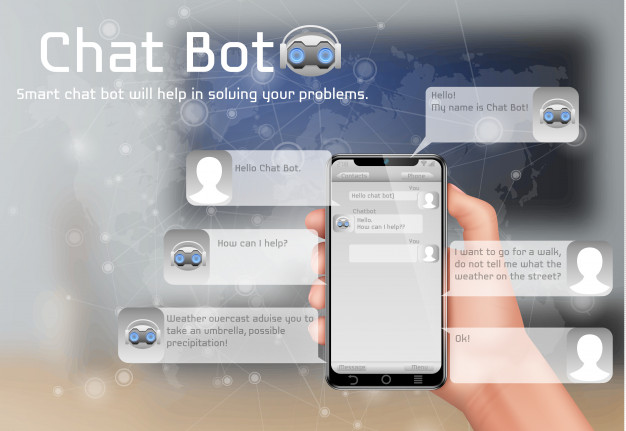
A chatbot (known as a conversational specialist), is a software technology that mimics real human communication in a composed or spoken way. The benefit of using this innovation is that it saves time and costs by automating customer support in an eCommerce space around the clock. In addition to this, it creates leads and income by gathering previous data about a customer. Also, chatbots can redirect a potential customer to the data they are looking for.
Hipmunk is an example of high client service. It is a travel search engine that uses the technology for travel-related queries and suggestions on their website. Likewise, the office supply retailer Staples employs a chatbot to offer items based on order history. It also assists to finish a purchase straight through a chat.
As the technology is considerably new, users will probably wonder that they are speaking with a robot; especially when live-chatting. Chatbot technology is reliant upon the progress in NLP (natural language processing), and without extensive improvement in this field, it will remain a restricted algorithm and keep on battling with more complicated speech.
With the passing time, eCommerce chatbots are growing more advanced, capable of communicating more naturally. Who knows, they may get refined to such a degree that we fail to differentiate them from real people.