On a Monday morning, you stumble inside an elevator with a much-needed mug of coffee in one hand and bag in the other. You mumble a grumbled greeting to your fellow riders in the lift.
Looking up, you come into senses that your fellow rider is none other than your idol. Do you introduce yourself to the person? Would you tell them how much you admire their craft? Would you request for an autograph?
Ding. Too late. The time to act has gone. Your eight-second ride is over, your idol exits the lift, leaving you in the dust. This futile attempt at making an impression outlines our eCommerce world today.
We breathe in a world where you get a time window of a few seconds for the first (and probably only) encounter of your brand with a consumer. HubSpot even suggests websites to inform the visitors what all they can offer within 3 seconds.
Quickly drawing and maintaining the attention of the customer means utilizing an above the fold design strategy for your website. That’s the reason we’re sharing the highly appreciated eCommerce website designs.
eCommerce Website Designs That Drive Conversion
As customers, we are overwhelmed with thousands of branded pieces of content every day. It is almost impossible to view, digest, and act upon each one of these, and only a small portion of them leaves an impact on us.
Let’s peek at one category of branded content, particularly the website. A brand’s website works as both an intro to the brand and a route to buy its products. The majority of initial impressions come from the website design of a brand.
Now we will understand how these eCommerce website designs employ several strategies to drive conversion.
Ahrefs

Ahrefs makes excellent use of white space (in their case, blue) on their homepage. It’s hard to find a balance between white space and content. However, the website design of Ahrefs’ provides a copy of proper sizing and spacing, resulting in better opportunities for conversion.
The folks at Ahrefs chose to display one bold CTA in orange color, making it pop out of the background to avoid inundating the user with a plethora of options. The contrast orange and blue quickly leads the user to the next step, beginning a complimentary trial.
Pure Cycles
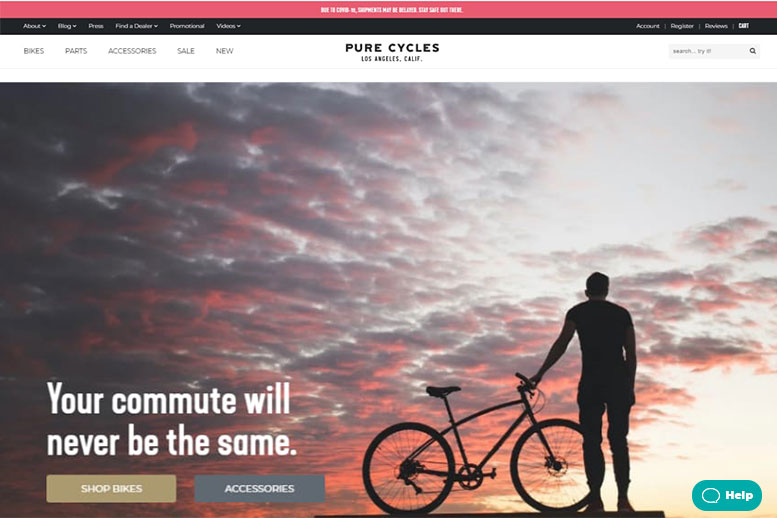
The logo, navigation utility links, search box, navigation menu, and the main image of the website are the most crucial elements of any eCommerce website. Pure Cycles incorporates all these elements above the fold.
Additionally, to make sure the user is not overwhelmed with the essential elements, Pure Cycles uses contrasting colors and types to create some hierarchy among the elements of the website.
The navigation menu is in black containing information for shoppers looking to know more, whereas the navigation menu in white leads the visitors to products they can buy.
Finally, adding some intrigue with stunning lifestyle photography is cherry on the cake for this website.
Airbnb
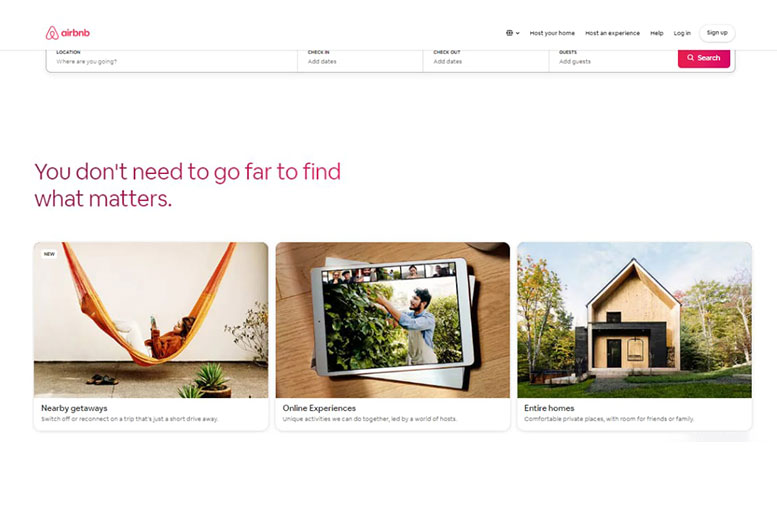
It’s essential to be a step ahead of customers. Airbnb is one shining example of this. The header of the home page incorporates a dynamic search bar allowing customers to hunt a place to stay once they enter the home page.
It’s not only convenient, but it also assures a faster path to purchase. The absence of this search bar, particularly on the home page, may result in a drop off of some users.
Also, we appreciate how the company answers to the current situation, the country is going through, with a bold and clear statement on the home page.
North Face
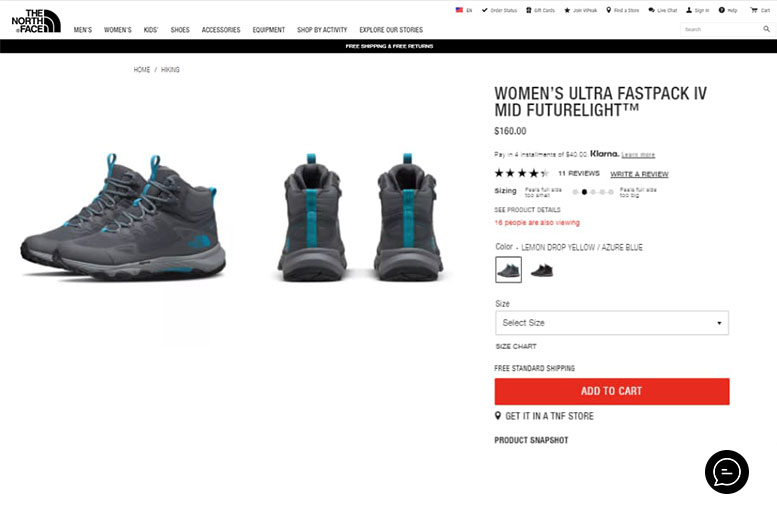
While formulating a path to purchase, it is crucial to direct the user through the process. Highlighting a CTA is one way to achieve that, and North Face is highly successful at that.
The user is directed easily through the site with the help of contrasting colors and typography. Additionally, the red and large CTA button, ensures there are zero drop-offs in the decisive phase of purchase.
The ‘Chat’ button is a bonus, making sure that the customer can have any questions/concerns answered from the convenience of the same webpage.
Wrap-up
We hope that our blog about eCommerce site designs will inspire the design of your web pages. Make the online encounter of the customers with your brand unforgettable and create an intuitive buying experience. The only chance for you is to make a remarkable first impression!
And in case you are looking for help with your eCommerce website design, reach us through the comment section below. Our team will be happy to be in touch with you!
Getting caught up in the intricacies of paid ads can be very annoying and time-consuming. But to mark an end to your worry, our team is here to your rescue. From Google Shopping advertisements to social media promotion, Axtrics is here to help you improve ROI and boost overall conversion with this blog on PPC tips.
Some eCommerce PPC Tips
Follow the below given PPC tips to convert searchers into happy shoppers if you are looking to increase your paid media conversion rate:
- Understand your demand curve
- Display ads at the right time
- Go for long-tail keywords
- Create a list of negative keyword
- Use extensions
- Adjust geolocation settings
- Target mobile devices
- A/B test
1. Understand Your Demand Curve
Observe AdWords, Analytics, and Bing Ads of previous years to know how the personas of your targets change in behavior during the year. Account for weekly changes along with other seasonal changes that may differ from one year to another.
To best predict when you’ll notice the next change in demand, check factors like the day on which a holiday falls every year, seasonal changes, etc. Note the changes taking place in the curve with each factor, to best predict the time around which you will see the changes.
2. Display Ads at The Right Time
The chief component of inbound marketing includes displaying your ads to the right individuals at the right time. Carry out some research to learn at what time your audience is the most active on your advertising platforms.
Accordingly, set the best advertisement schedule as per your audience. In case you’re just buckling up with paid search, we suggest setting your plan to 24/7. After reviewing the reports and determining the timeframes of the period when audience activity is the highest, cut your advertisement schedule back to save some money.
3. Go for Long-Tail Keywords
Keywords with high search volume and low competition are the ideal keywords. Finding the best keywords may consume some time and require some planning, so keep researching for the keywords your competitors want to rank for.
Avoid using broad-tail keywords such as “dress” or “electronics” because these are high-level search words that yield millions of results, making it difficult for your page to rank. Consumers usually search these kinds of keywords during the awareness stage of their shopping journey (when they don’t mean to buy anything.)
Alternatively, you can use long-tail keywords such as “Women’s little black dress” or “Lenovo Chromebook Duet” to boost your chance of ranking high on SERPs. Generally, it is easier to rank with long-tail keywords due to the lower search traffic. Consumers search these keywords in the consideration/decision-making stages of their shopping journey.
To know more about the search queries and popular keywords for your website, refer to our preferred eCommerce SEO tools for keyword research, and more.
4. Build A Negative Keyword List
The keywords that you don’t want your site to rank for are known as negative keywords. By creating this list, you instruct your search engines to avoid displaying your advertisement for those negative keywords.
We suggest conducting a Google search of the keywords that are beneficial to you and recognizing any other keywords that appear with your favorable keyword. If the keywords are not relevant to your brand, then we recommend putting them in the list of negative keywords.
5. Use Extensions
With the help of Ad extensions, you can give detailed information about your business on the SERP to your customers. Your contact number, address, links to landing pages, hours of availability, and more are some of the most common instances of extensions.
It’s essential to note that adding an extension does not ensure that it will show within your ad. The extension must give significant value, and the rank of your ad must meet the standard for the search engine to display your extensions.
6. Adjust Geolocation Settings
Do you want to target an audience in a particular location? If yes, then adjust your geolocation settings so that your commercial is displayed only in that specific area. Google AdWords utilizes the IP address or GPS location of the customer to ascertain whether the individual fulfills the criteria and sees your ad.
We advise brick-and-mortar stores to set the geolocation settings for their advertisements as per the audiences of that area.
When it comes to eCommerce shops selling solely online, increase the potential of your market by changing the geolocation settings to a greater radius. As you never know who all are interested in your products or services!
7. Target Mobile Devices
As mobile eCommerce trends are increasing, ensure to leverage the mobile-targeting capabilities of Google. In case you have an advertisement that may provide better to mobile users than those using desktop, then create commercials for mobile users only.
Consumers are using mobile devices to shop more than ever before. So, it is necessary to design your ads and overall website keeping the mobile user in mind and make sure that every directed landing page follows the best practices for mobile eCommerce
8. A/B Test
A/B testing numerous variables is essential as there’s always something to test within your advertisements or website.
Here at Axtrics, we test and optimize the variables each at a time to help drive the strategic business decisions of our clients. For further knowledge, read our in-depth blog at ideas and tips for A/B testing.
Wrap-up
We hope the above-written PPC tips will help you optimize your ad campaigns and boost your revenue!
Do you want to enhance your eCommerce PPC strategy? Reach our team through the comment section given below to learn how the PPC approach of Axtrics can help you maximize your ROI.
Every marketer desires to stimulate organic traffic by building a one-to-one relationship with their brand. Yet, how many sticky notes do you have to throw away in the waste bin before you come up with this killer idea?
With the increasing expectations of the buyer from brands, formulating a strong marketing strategy is more crucial than ever before. Continue reading for a few helpful tips for forming your content strategy framework.
Forming A Content Strategy Framework
In today’s busy times, the days of brainstorming have come to an end. The inbound strategy used nowadays is more about the path you choose rather than waiting for inspiration to come. So before getting into brainstorming on your own, make sure you’re following the steps given below to make your efforts more rewarding:
- Set goals
- Understand your audience
- Do your research
- Be relevant
- Create a voice
- Experiment with various formats
- Make it shareable
- Test, test, test
Set Goals
Begin with identifying what is possible to accomplish in a fixed amount of time. To boost growth, you should set SMART (Specific, Measurable, Attainable, Realistic, and Timely) goals.
Let’s assume you aim to “publish more blog posts.” So how are you going to achieve that? Well, try turning your goal into a SMART goal by trying to “Publish ten blogs by the end of the month to increase organic traffic by 10%.”
SMART goals set a sanctioned timeline and a measurable result. That’s why defining your goals upfront is essential – it provides you a benchmark to assess future performance.
Understand Your Audience
Identifying your audience is the key to a thriving content strategy framework. We suggest forming target personas of your existing and possible customers. Keep demographics and psychographics in mind while formulating personas.
Demographics cover information like age, income, race, and location, while on the other hand, psychographic deals in personality, interests, values, and more. These two traits form a comprehensive view of the thinking and behavior of your audience.
As you undergo this process, keep in mind that 2-3 personas are enough to get you started. Recognize the customers that provide maximum value to your outcome and provide to their interests. Don’t forget that tailored content increases relevance and can ultimately drive customers to take action.
Do Your Research
Several businesses strive to improve their search presence. So, to make sure your content ranks as per your need, research your keyword search volumes to recognize areas where your brand can have the most significant impact.
Start with making a list of keywords you’d like to rank for. After creating the list, enter the keywords in the Google AdWords Keyword Planner to assess the search volumes and competition. Watch for words with high search volume and low competition.
Make use of SEO tools to conduct keyword research. Check out some of the eCommerce SEO tools that we recommend to carry out keyword research.
Another crucial step is to estimate loopholes in the content strategies of your competitor. Study the content your competitors are writing and publishing, and know ways to fill in the blank space and make it stand out.
Be Relevant
You need to avoid creating irrelevant content to get the desired results. So, observe and have a clear understanding of what your audience might be thinking and create the content that they want to see and read. What kind of information gives value to them?
Present them with the content that is engaging and relevant. Content marketing doesn’t always revolve around a product your brand is striving to sell. Instead, a comprehensive content strategy framework means providing value to your audience by distributing your expertise.
Create A Voice
Powerful branding expands beyond visual assets. Think about the personality of your company and write from that particular voice. In case you don’t have a guide to your brand style, take the necessary time required to develop the style that represents your brand. The style guide can incorporate key phrases or adjectives that describe the culture and personality of your brand.
Ensure stick with whatever style you develop. Consistency becomes especially significant if more than one person creates or writes content for your brand. Make sure to keep things professional by assuring a consistent voice throughout the content of your brand.
Experiment with Various Formats
There is no limit when we talk about content formats. However, make sure to get your format easily accessible for your audience. For instance, avoid giving .zip files that might not make any sense to an audience that browsing on mobile devices. Provide the people with exactly what they want by meeting them wherever they are.
In case you’re exploring for a new format, consider looking into resources like eBooks, guides, videos, blogs, and infographics. The individual tactics might differ from one business to another, so it is essential to take your time to experiment and find out what works the best for your business.
Make it Shareable
Draft content that your audience willingly shares. So, choose a format and topic that relates to the personas of your target audience.
Although there are various reporting statistics for scaling your content strategy framework, the number of shares can be a great KPI to assess engagement. That’s why it’s essential to create your content in an easily shareable way.
Test, Test, Test!
Testing is the most reliable way to make sure your strategy is working. Don’t be hesitant to try new things while executing testing. Tests can vary from titles/headlines to images to calls-to-action and much more.
The key is to see a notable difference, ensuring that your results are valid. For additional insights, make use of these tips for A/B testing.
Summing-up
Start practicing this method if increasing organic traffic is your goal. Creating an engaging and fascinating content strategy framework is only a part of maintaining a comprehensive inbound marketing strategy.
Are you keen to know how Axtrics can help to enhance your marketing strategy? Contact us through the comment section given below with any comments or questions, and our team of experts will be in touch!
Every marketer seeks for the most reliable and highly-optimized strategy for inbound marketing. However, this isn’t true for all eCommerce brands.
This blog will put light on some of the most helpful tactics that can ignite the performance of your site and enhance your strategy.
Inbound Marketing Strategy Tips
Implement the following steps to ensure a comprehensive inbound marketing strategy:
- Make a plan
- Have patience
- Test continuously
- Utilize a support tool
- Pay attention to the details
Make A Plan
Planning is the first and most significant step of any inbound marketing campaign. Begin with setting a clear goal about what you’d like to achieve with your campaign.
Do you want to sell or promote a specific product? Are you trying to pull more email subscribers? Whatever your purpose is, you need to have a comprehensive plan before achieving that goal.
While creating a workflow, make sure to plan your emails, lists, and goals in advance. Position your workflow in such a way that the user converts on everything that you are marketing to them. Well-planned-out emails and workflows are responsible for making or breaking your inbound marketing campaign efforts.
Have Patience
The readiness to be patient is one of the most critical issues that we face as marketers. It’s essential to keep in mind that marketing doesn’t happen with any magic trick. We can’t configure any links and be at the top rank of the results pages of the search engine with just a snap of our fingers.
Even though we wish it to be that easy, but only patience paired with readable and optimized content will pull your brand in the right direction, helping you to build and expand your online store.
We suggest having a solid content marketing strategy in the spot. While creating your strategy, make sure to take into consideration these SEO insights and tips to enhance your rankings in organic search and optimize your store for benefit.
Test Continuously
In case you’re not testing your strategies properly, there’s an absolute chance of you missing out on some worthy revenue. A/B testing is something that each marketer should be implementing.
A/B testing is the best means to determine the marketing strategies that produce favorable outcomes for you and understand the sections that require enhancement. As marketers, we need to keep a tab about the latest industry developments and test these changes to continually improving the possibilities for clients.
At Axtrics, we practice A/B testing as much as possible. There is always something to be A/B tested, whether be it click-through rates or open rates.
Utilize A Support Tool
You must have appropriate support to run a successful inbound marketing campaign. Besides having a great team, support tools and CRM systems (such as HubSpot) are a good spot to begin.
Use the support tools that readily available to not only give answers to your questions but also helps in walking you through the processes you are working on and provide solutions.
Pay Attention to Detail
The details are very crucial. While working on your workflows, make sure to pay keen attention to the details.
Not picking the right starting goal list, smart list, then the branch will cause your whole workflow to disrupt or track the incorrect information.
Make sure to keep your content marketing highly detail-oriented. You must have a purpose in your writing and ensure it to be a well-thought-out one in case you want it to rank highly driving traffic to your site.
Wrap-up
We hope this blog will help you to have a great and flourishing inbound marketing strategy.
Are you keen to know how we can help you to improve your inbound marketing efforts? If yes, then reach us through the comment section given below.
Around 35% of your email recipients decide to open your email after reading the subject line only. So, along with following the best practices for email marketing, it’s essential to put extra efforts in creating intriguing subject lines for your emails.
Grabbing the attention of your audience from the beginning can perform miracles for your opening rate and engagement. Hence we’re sharing with you some of the best email subject line practices to implement ASAP and enhance your email marketing strategy.
Best Practices for Email Subject Line
Think like a customer. Most probably, your inbox is swamped every day with emails. But what catches your attention that makes you want to see what’s inside the email you choose to open?
Some of the most reliable email subject line practices to follow while brainstorming for unique ideas:
- Keep it short & simple
- Avoid traps such as spam words and sales language
- Add urgency by introducing a deadline
- Ask questions
- Personalize
- A/B test
- Keep looking for your next adventure
1. Keep It Short & Simple
A lot of people do not click on every email they receive. Emails with catchy subject lines are the ones that provide notable results.
Keep a short and sweet subject line of your email so that it sticks out of a crowded inbox. Also, don’t hesitate to be creative here and make it so intriguing that your audience would want to engage with the email.
Take account of the length of your subject line. In case it’s too short or is too wordy, customers are not likely to engage with your email. We suggest that your email subject lines should not exceed 60 characters to improve its visibility.
Also, be mindful of the mobile experience while drafting your subject lines. In case the maximum number of views come from a mobile platform, then we suggest keeping the number of characters under 35. After all, mobile accounts for 46% of all emails clicked open.
2. Avoid Traps Such as Spam Words or Sales Language
Even though you may notice many businesses using words such as free, percent-off, help, or reminder, like a trap. As reported by MailChimp, these commonly used words are the chief spam filters, so avoid using them whenever possible.
We also recommend not using capital letters for writing complete email subject lines. Although it may appear to be an excellent way to catch someone’s attention, this method can mark your email as spam. Keep things short, clear, and honest to make sure your message reaches the inbox of your audience.
3. Add Urgency by Introducing a Deadline
Due to our busy calendars, we forget to check our emails many times. Unfortunately, even the most creatively composed email subject lines can succumb to this trend. So, to excite your audience to read, try adding a deadline or particular time to create a sense of urgency.
Provide your readers with a reason to act fast by making it clear about the availability of the offer. An exclusive limited time offer can also attract your audience to respond to your email. Add a time window to your sale or offer so that your audience feels the urge to MUST take action quickly.
4. Ask Questions
Posing a query in the subject line of your email is one of the best ways to make someone consider opening the email. Imagine, you get an email with the subject line stating “Are You Looking For Increasing Your Email Open Rates?” Odds are your interest to know the answer will drive you to open the mail.
You must provide a proper answer to the question you pose if you choose this route. Failing to achieve this could cause your contacts to question your credibility in the future.
5. A/B Test
Be brave and do A/B testing of your subject lines to determine what works for you and what doesn’t. Many products provide free and powerful functionality like HubSpot Enterprise that can help you in increasing the open rates and stimulate additional engagement.
Do some keywords in your subject lines gain higher open rates? Does posing a question in your subject lines cause your contacts to take action? These are quite a few questions that you can test to create smarter emails with A/B testing.
6. Personalize
By personalizing your emails, you humanize your messages, resulting in increased engagement of your contacts. Adding the first name of your subscriber gives the sign that you care, and they are not just an automated recipient.
Consequently, your audience is more likely to engage with the content of your email. If you intend to utilize personalization tokens or gifts in your emails, be sure you have sufficient fall-backs to prevent email sending errors.
Besides, analyze how this personalization aligns with your brand. For instance, using emojis can be an effective and enticing tool for more casual businesses. So, be true to your brand and ensure that your content always resembles your real personality, voice, and tone.
7. Keep Looking for Your Next Adventure
Keep in mind that the same tips may not work for everyone when it comes to email marketing. In case you run an eCommerce business and are looking to generate more revenue, then the best practices for your email subject line will vary from a B2B business that is looking to generate leads.
However, every business should strive to avoid making typical email marketing mistakes. In the end, adventure and data are the trademarks of successful and thriving email marketing efforts.
Conclusion
We hope that these best practices for email subject line will help you to increase your open rate and engagement of your audience. Try to keep your messages outside the spam folder by avoiding using sales language, all capital letters, spam words, and an excessive number of exclamation marks.
Using short subject lines, building a feeling of urgency, posing a question, and personalizing your content is most likely to increase the engagement of your audience following a higher open rate.
If you have any inquiries regarding these best practices for the email subject line or want to learn how to enhance your email design, contact us through the comment section given below.
It’s time to begin thinking about sales and marketing from a different perspective. Customers’ preferences and choices are continually changing, but the strategies of many companies are not.
Honestly, many traditional techniques of sales and marketing are not serving anything anymore. The average person gets over 2,000 outbound retailing interruptions daily, out of which the most are either blocked or ignored.
Switching to inbound marketing will allow qualified customers and leads to come directly to your store, rather than the other way around.
Inbound vs Outbound Sales
The relationship between a buyer and a seller has evolved during the past decade. Several individuals now connect traditional sales with many elements of deception, resulting in a common lack of trust.
eCommerce is growing at a faster past and is easily accessible from different devices. As an outcome of this abundance of available information online, today’s buyers are even more aware than ever before.
In this blog, we will break down inbound and outbound sales so that you can achieve the correct balance for your business.
The Outbound Sales Method
The method of outbound sales is also known as traditional sales that revolve around companies getting leads and consumers. Outbound techniques incorporate:
- Cold calling
- Email blasts
- Expensive print advertising
- Business or trade shows
- Television ads
Outbound sales can be quite expensive for companies bearing less effective results due to the technologies created to block spam emails and identify caller ID. Instead of adapting to the new modifications, several businesses continue to try these same techniques resulting in losing both customers and money.
Rather than getting overwhelmed by the continuously changing customer, we suggest adapting and using inbound sales techniques.
The Inbound Sales Method
The method of Inbound sales is human, holistic, and human. Inbound marketing tactics enable you to connect with your consumers and gain consideration of the empowered shopper. If used accurately, these methods bring qualified customers straight to your company, sparing you both time and money.
The basic approach of inbound sales concentrates on elevating the overall customer experience that your business provides (both potential and current customers).
To help you gather a more comprehensive understanding of the sales methodology, we’re breaking down it into four phases:
- The Identify Phase
- The Connect Phase
- The Explore Phase
- The Advise Phase
1) The Identify Phase
The phase where you’ll separate passive customers from active customers.
Active customers are buyers who have already started their purchasing journey. They’re scanning for a solution to a particular issue and may instantly gain from the product or service that you are offering. From there, you can register them as qualified leads and get in their touch anywhere in their buyer’s journey.
Passive customers are buyers who are not currently willing to make an order but may be interested in making one in the future. Though marketers usually prioritize active users over passive users, it is likely to get passive customers to convert into active ones – even though it may demand a bit more extra effort.
Social media is an excellent tool to utilize during this phase as it will enable you to collect data about a potential customer that you could not reach earlier.
2) The Connect Phase
After recognizing the right kind of customer, you reach in the connect phase. Its stage is a significant part of the inbound sales strategy as it is all about establishing a relationship with a possible client.
We suggest starting this phase with a personalized message, showing that you understand the context of the buyer. By exhibiting your capability to listen and comprehend a user’s current problem, they will start to develop a sense of faith and reliability with your brand.
3) The Explore Phase
Once you create a connection between your company and the customer, you can make a smooth transition into the explore phase. The purpose of this step is to obtain a comprehensive understanding of the needs of a customer through an in-depth and mindful conversation with expert consultation.
By interacting directly with the buyer, you will get a better understanding of their overall intentions.
4) The Advise Phase
After going through all the previously stated phases of identifying your buyer and building a relationship with them based upon their needs, you enter into the fourth and the last stage. At this point in the inbound tactics, you have to give a presentation that puts light on all of the prominent elements of your company.
However, unlike outbound sales, this should not be a generic selling pitch that could be provided to any buyer. Rather than this is a presentation that is tailored, especially for the client. Share the particular ways your product or service will serve them to achieve the ends they mentioned to you during the explore phase.
Finding the Correct Balance for Your Business
Even though we’re big advocates of inbound sales and the significant profits it offers to a company, we also understand that inbound and outbound work collectively to create a holistic approach.
Attaining the correct balance between inbound and outbound methods and the tactics that are currently working in favor of your business is an essential component of building a successful eCommerce marketing strategy.
If you’ve received exceptional reviews and a high ROI on a smart television advertisement, use that to your benefit by taking it to the inbound level. This step will help to grow engagement and improve sales.
Add a relevant hashtag to your ads to encourage viewers to associate with you on different platforms. It will enable you to utilize your current campaigns while also learning to recognize qualified, inbound leads.
Getting the right balance between your current strategy and the inbound methodology will enable your business to make a seamless transition towards a smarter way of trading.
Summing-up
The inbound sales tactics have designed a new type of buyer-seller relationship, the one that works on trust and thrives on communication. By recognizing and associating with active users and your targeted audience, you’ll save your time and funds while simultaneously forming a lasting relationship.
If you have any inquiries about inbound-outbound sales or you would like to know how Axtrics can help you improve your inbound marketing strategy, reach us through the comment section below. Our team of specialists will be in touch!
Sadly, there’s not a particular proven tactic to bring new visitors to your site and convert them into loyal consumers. Even though paid promotion helps, but still spending thousands of dollars to boost traffic doesn’t always generate sales.
So instead, we recommend developing a unique and comprehensive marketing strategy that is based upon the conversion funnel of eCommerce. It will not only let you optimize the journey of your buyer but also will improve your return on investment.
What Is The eCommerce Conversion Funnel?
The eCommerce conversion funnel leads your potential buyers throughout their shopping journey. It plans out everything right from the initial contact with a visitor to how to properly utilize brand ambassadors. Optimizing this process into a personalized experience at every point of contact will result in a seamless journey, increasing the conversion rates.
For customers to walk through the shopper’s journey, your brand needs to go through the various stages of the eCommerce conversion funnel mentioned below:
- Reach
- Engage
- Convert
- Delight
1. Reach
The initial stage of the eCommerce conversion funnel comprises the expansion of the reach of a brand through influence marketing strategies. Target and personalize your attempts to present an ideal content at an ideal time to the relevant audience. Do your research and analyze the personas, behavior patterns, demographics, motivations, and goals of a buyer to help to accomplish your endeavors.
Besides, first impressions have a long-lasting impact on the perception of the brand, so make sure that your potential leads have a forward-looking experience during their very earliest encounter with your brand. It will set the grounds for a long-term customer relationship.
Increasing Brand Awareness
Some of the great tactics to improve brand awareness and site traffic and add possible leads to your brand incorporates:
- Search engine optimization
- Email campaigns
- Social media marketing
- Paid media
By displaying your expertise through appropriate and high-quality content, you’ll become an essential resource to the customer. Integrating your content across all of your techniques will additionally help in producing a well-balanced marketing experience.
During this stage, it’s essential to keep your focus on fostering a relationship and instilling trust amongst your brand instead of making a hard sell. Extend your reach by enhancing the ways of how people engage with your content.
Optimize your product pages, engage with people on social media, use creatively designed landing pages, and produce promotional content to make sure that you enhance the customer experience.
We suggest utilizing Google Analytics to verify whether you’re efficiently reaching your target market or not. Audience and acquisition metrics enable you to measure the site traffic your marketing efforts are attracting.
2. Engage
To resume building trust with potential consumers and double their investment in your brand, the next move in the eCommerce conversion funnel is engagement.
Building an affectionate bond with a visitor is essential to develop a long-term relationship. We suggest engaging yourself with possible leads on social media – whether through a poll, live stream, Q&A session, contest, or giveaway.
Encouraging visitors to fill in a form lets you obtain their email ID and resume your marketing to them over time. While forming your email strategy, remember to follow top email marketing trends 2020.
Examining metrics such as pages per session, bounce rate, and average duration of a session is useful in mapping the success of your marketing strategy.
3. Convert
Following earning the interest of a potential customer, it’s time to give them all the valid reasons to make a purchase. Influence buying decisions by bringing light to the products or services related to the needs of a customer.
Design pages with a precise call-to-action to improve conversion rates, decrease the abandonment of cart, and make the buying process as easy as possible. Catalog optimization, product queries, live chats, welcome offers, and free shipping are a few ways that you can employ to simplify the purchasing process.
In case you find that your potential consumers are not quite ready to convert, try proposing a free trial to them. Eventually, try to drop poor on-site experiences and technical errors.
Estimate and assess metrics like the number of transactions, revenue, and communication rate to learn about the number of customers your marketing strategy is drawing in. Then, examine how they impact your ROI.
Remember to note your top-converting landing pages, bringing into your knowledge, the pages that are drawing the most qualified leads.
4. Delight
The final stage of the eCommerce conversion funnel. It’s time to delight and retain the customers you have earned.
To ensure they return to your site, enable consumers to stay involved, share their feedback, and suggest your site to their friends. By doing so, you’ll increase their brand loyalty, develop brand exposure, and enhance the reputation of your brand.
If you already own a loyal customer base, then make sure to treat them like royalty with exclusive promos, anniversary offers, and product reviews. Rewarding loyal consumers goes a long way towards keeping relationships and improving your ROI.
Summing-up
You can drastically boost the success rate of your marketing strategy by increasing your reach, engaging leads, transforming potential leads into shoppers, and retaining consumers by delighting them.
Keep in mind that an eCommerce conversion funnel is a customer-centric strategy that focuses on efficiency. As your business proceeds to adapt to the dynamic environment of eCommerce, your conversion funnel will also continue to evolve with it.
Are you keen to learn more regarding inbound marketing for eCommerce? Reach us through the comment section given below with any concerns or inquiries. Our team of marketing strategists would gladly assist you.
Essentially, there are two kinds of marketing: inbound marketing and outbound marketing. Both are the marketing techniques that draw shoppers to your brand, but the two vary in techniques. So, how do you recognize which is the best for your business? Let’s begin with differentiating between the two.
Outbound marketing focuses more on traditional modes of marketing, like telemarketing, direct email, television and radio commercials, sales flyers, etc.
With people’s ability to fast-forward the commercials and opt-out from paperless mail options, drawing customers with outbound marketing techniques is growing more complicated.
Inbound marketing, on the contrary, focuses more on drawing customers to your website via the content of high-quality, social media, SEO, and branding.
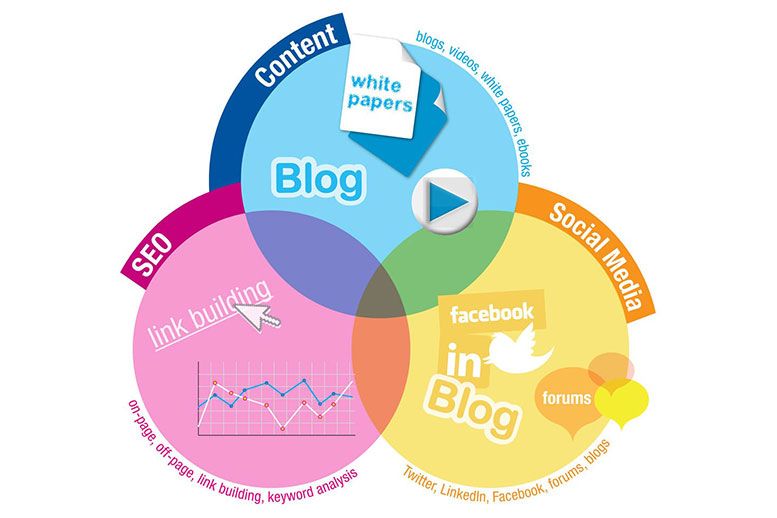
It is a blend of marketing strategies and techniques focusing mainly on drawing, converting, sealing, and pleasing customers by sharing content relevant to the target audience.
Brian Halligan, CEO of HubSpot and the inventor of the term inbound marketing, advocates for the inbound strategy to help yourself “get found” by the individuals who are already learning about and buying in your industry.
It’s crucial to note that an inbound marketing strategy usually incorporates content management. However, content management is not merely what’s there on your website. It also covers all of the “free” traffic sources.
The Process
Any strong strategy follows the process given below:
- Bring traffic
- Convert traffic to leads
- Transform leads to sales
- Convert shoppers into repeat higher margin shoppers
- Analyze
Bring Traffic
Search engine optimization (SEO), email campaigns, and social media marketing work together at the initial stage to draw visitors to your website.
Show your expertise to potential visitors by optimizing the content of your site, engaging with social media users, designing landing pages, and developing promotional content.
Convert Traffic to Leads
Unique value propositions, efficient calls-to-action, and banners promoting offers or deals on specific products are effective strategies to transform website visitors into leads.
Also, A/B testing helps in optimizing calls-to-action, landing page conversion, and much more. So make sure to perform A/B testing so you can discover the best strategy that works for your brand, ultimately turning leads into sales.
Transform Leads to Sales
It takes both a marketing and sales team to turn leads into sales. Take into consideration social media presence, demographic information, purchasing behavior, and more to optimize the performance of your marketing strategies.
Customizing the delivery with particular times and channels of communication will enhance the possibility of visitors purchasing something from your website.
Higher Margin Customers
The fourth level stipulates that businesses can decide which kinds of content – and at what times – bear the best outcomes.
What are the best outcomes? That purely depends on your website’s intentions. High margins and repeat shoppers are the two most popular.
Analysis
Most marketers are well aware that best practices for marketing are invariably evolving. That’s why it’s essential to keep pace with industry trends.
Understanding what kind of content your customers need, what sort of delivery method they prefer, and when they require it is critical for keeping optimal click-through and conversion rates.
Staying active on social media and keeping high online visibility via quality content accommodates to gain and retain shoppers.
The Sales Funnel
Inbound marketing has grown and emerged since its first declaration in the mid-90s. It’s necessary to understand the sales funnel, for a better understanding of how it works towards improving sales.
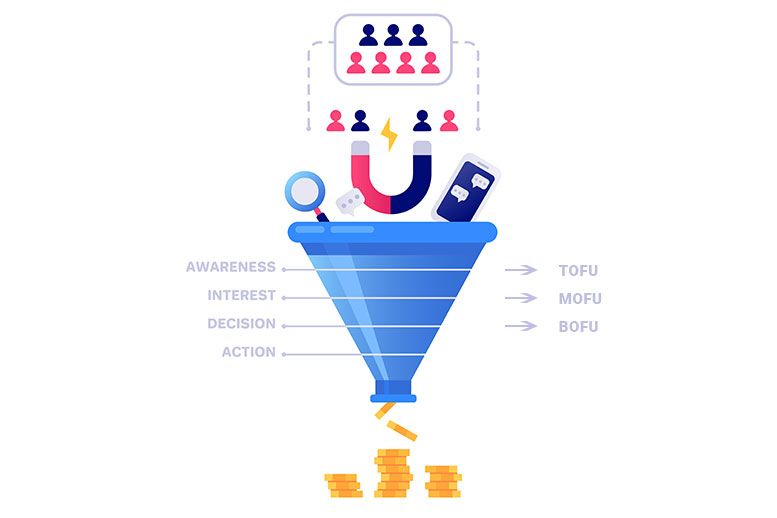
1. Top of the Funnel (TOFU)
It is the stage where unaware shoppers are looking to gain information about a particular product or service they’re drawn towards. It is the stage where high-level content draws in traffic to your website.
So make sure to share informative content, such as guides, “how-to” content, eBooks, and emails in this stage. Remember, customers in this stage are keen to discover the product or service they’re looking for.
2. Middle of the Funnel (MOFU)
This stage comprises the buyers that are keen on buying a solution for their problem but still need to be convinced to buy from a specific site.
As these buyers are assessing every choice they have and are hunting for the most suitable solution in this stage, we suggest sharing content that explains how past customers have profited and how they will benefit from your service or product.
3. Bottom of the Funnel (BOFU)
It comprises of the customers who understand what they want and can make a choice about the services or products they want to purchase.
To make customers pick your brand, it’s crucial to share relevant and useful content in this stage. Assessments, discussions, and on-site demos are excellent content for this stage of the funnel.
By following these stages and acknowledging where each customer is in the shopping journey will assist you to better market towards the specific needs of each customer.
Conclusion
Inbound marketing is a powerful and assessable resource for the growth of your website. It is extremely economical and grants companies the capability to reach their targeted audience by the quality and personalized avenues.
We aim to help clients draw, retain, and engage buyers. If you need advice in optimizing your inbound marketing strategy, please reach us through the comment section below.
There always comes a time when you spend a large chunk of your time preparing for a website launch that everyone associated grows keen to push it live. It’s very natural to overlook unintentionally tiny details essential to launch your site.
Overlooking the tiny details only leads to added difficulties for you to tackle later. That’s why it’s crucial to follow a website launch checklist and recheck or double-check that you’ve completed the essentials.
So what should include in a website launch checklist?
Before launching your eCommerce site, make sure to double-check the things given below:
- Examine your content
- Optimize your SEO strategy
- Review your design details
- Focus on functionality of your site
Examine Your Content
After thoroughly reading your content once, make sure to re-read it. Make sure there are zero grammatical mistakes. There is nothing more unprofessional than having grammatical or spelling mistakes in the content of your new site.
Besides, reviewing the content of your page, make sure to review all of the content written on your downloadable assets like videos, eBooks, and webinar transcripts. Everything in your web copy from headers to paragraphs to footers must be accurate and placed on the exact page.
Optimize Your SEO Strategy
While checking your SEO strategy, you must consider the following:
- Use keywords correctly
- Put meta descriptions in place
- Add alt tags to your images
Additionally, the titles of the pages are one of the most significant aspects of an eCommerce website. The title help visitors and search engines learn more about the content and context of the page. Make sure to take some time out beforehand to match the title of your page with your web content.
If you are not certain about your approach towards any of these things, then you must go through your site again and optimize your strategy to incorporate the best practices. With an optimized strategy, you’ll see growth in your organic search rankings.
Review Your Design Details
After monitoring the development of your website design, have you considered to check how it appears in other browsers? What may look picture-perfect in Chrome may resemble a hot mess in Firefox.
You may have a responsive website, but that doesn’t suggest it will appear sharp and accurate over other platforms on its first try only. Don’t wait till after your website is live to find that various other browsers are not presenting your design accurately.
While checking your website design across the other platforms ensure to check that:
- Website pages are compatible with gadgets like Android, iPhone, and tablets.
- Website pages are compatible with other browsers (Firefox, Chrome, Safari).
- All scripts are optimized.
- The style of paragraphs is working correctly.
Focus On Functionality of Your Site
After taking the time to set up your site completely, you would want your visitors to have the capability to engage with every feature of your site. So ensure to test your website and assure that everything works as it should.
We strongly encourage looking at your website as any of your visitors would. Double-check that all features and aspects (including form fields, redirects, social media icons, and third-party integrations) of your site work properly.
Don’t be scared to request different members of your team to go through or test your site. You’d be startled to observe how diverse people navigate through the site and what areas you forget to check.
Bonus Tip: Triple Check the Tracking of Analytics
We have seen many instances where people check the four things posted above, then immediately decides to launch the site. And then, usually, about after a week, someone recognizes tracking is messed up in analytics and realizes that they’ve missed an opportunity to gather valuable data at the time of website launch.
Avoid mucking up your data. Before launching the site, check that your Google Analytics tracking is all set so that you can precisely measure the success of your launch.
Conclusion
There are several factors to analyze before the website launch. We hope you will use this checklist to make sure you’ve incorporated the major components required for a successful launch.
In case you’re looking for any assistance in launching your eCommerce site or would prefer further website support, reach us through the comment section given below. Our team of experts will be glad to assist you in successfully setting up your online store.