Inside Revo America’s future-ready eCommerce Transformation
Take a look around your neighbourhood: security cameras are everywhere! Our homes, offices, restaurants, schools, hospitals, and airports all reply on video surveillance to strengthen their safety and security. One brand providing these safe experiences around all these properties is Revo America, a leader in security products manufacturing, management and support.
With the earliest stages of the company dating back to the 1980s, Revo America has never been a stranger to growth. Right from their beginning, they always aimed for being among the top manufactures of security products in the US. Such futuristic vision led this brand to expand their product lines, enter new markets, and cater to the latest needs in the video surveillance industry. Revo America quickly established itself in the retail market as the upper echelon of video surveillance equipment.
This same forward-looking mindset developed the next goal to evolve in the eCommerce space in late 2015. They knew commerce was transforming on all fronts. They didn’t want to miss acquiring worldwide customer base and exciting revenue opportunities that an online platform could offer.
Together with their Professional Solution Partner, Axtrics eCommerce, they decided to embark on a journey of digital transformation.
WEBSITE DESIGN
Choosing Axtrics eCommerce as their Magento partner made sense for Revo team, particularly because of our end-to-end expertise to handle everything from design, development, integration and launch. Revo America launched their online website in 2016, using Magento Commerce which helped them with:
- A credible source of product information accessible by anyone across the country
- An easy-to-use dashboard for easy management and oversight of all inventory and revenue
- The ability to manage multiple product lines from a single Magento instance
- Advanced ecommerce analytics for customized and accurate reports
- SEO-rich infrastructure, bettering organic search rankings
CHALLENGE
With customers ranging from individual shoppers looking for the perfect home security systems, to small businesses wanting to strengthen their safety and security, Revo America needed a flexible eCommerce solution that could work seamlessly across multiple customer touch points. To add onto that, in the video surveillance industry the combination of cameras types and numbers combined with different types of security recorders can create an overwhelming number of SKUs. In Revo’s case, their SKUs were thinly spread across multiple security features, making it difficult to source and fulfil orders.
SOLUTION
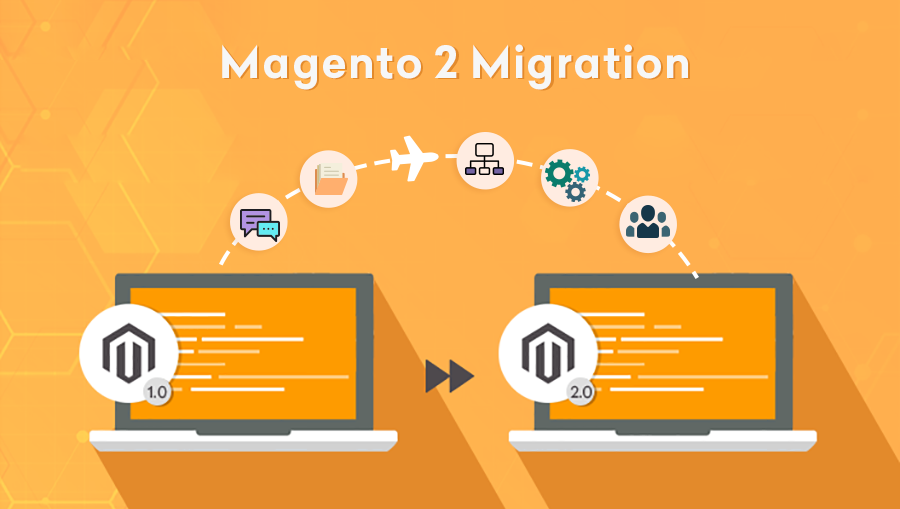
With this understanding they decided to make the leap to Magento Commerce 2 in 2018. Magento Commerce 2 allowed Revo to fulfil orders from any location and make more SKUs available online, while improving the customer experience and driving incremental revenue. Magento 2’s flexibility and open framework allowed Revo America to make the customizations they needed to efficiently run their business and serve their customers. This upgrade helped Revo to fully automate their return process, including returning the product to inventory, refunds, and even payment fraud management. This fully integrated eCommerce solution helped them sell more products, improve the efficiency of their fulfilment operations, and scale effectively.
HIGHLIGHTS
Following are some of the most notable highlights of Revo America website experience:
RESPONSIVE DESIGN
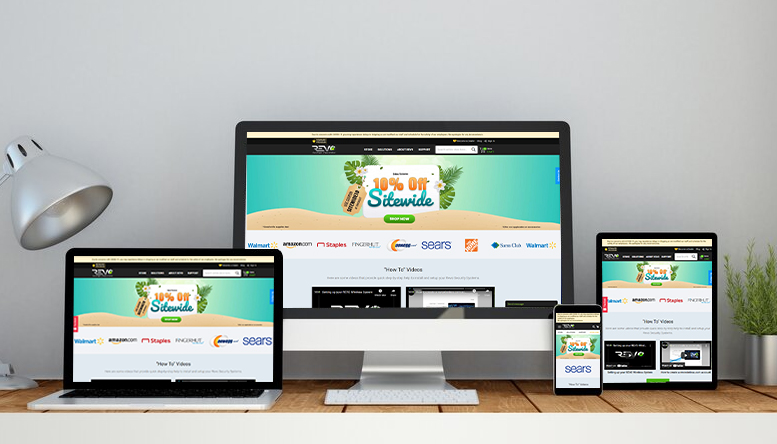
Magento 2 websites are responsive, meaning users can browse Revo America’s website from almost any device. For each type of screen, Revo America has the ability to choose which design elements are displayed more prominently to drive conversions. Every screen resolution contains full eCommerce functionalities to guarantee smooth experiences for all types of visitors.
MODERNIZED HOMEPAGE
Revo America created an all-encompassing experience with their new homepage. A large sliding banners is also incorporated which can be easily managed to upload new slides and content from the Magento backend. Additionally, they made their product categories accessible and dedicated a section for their most recent offers and coupon codes.
INTUITIVE NAVIGATION TOOLS
Aside from their categories bar, Revo America provides multiple ways for visitors to find the products they’re looking for. The menu items offer easy browsing and a visible search bar for users who want to look for particular products. Their search tool allows users to filter and narrow searches by attributes. Additionally, static features and new product sections deliver strong cross-selling potential.
INTEGRATED THIRD-PARTY SOLUTIONS
While the native features on the Magento storefront intrigued Revo America and have led to increased sales, integrating their store with third-party solutions has bolstered internal efficiency. Revo America took full advantage of Magento’s flexible codebase to create an entire eCommerce system that linked their stores with:
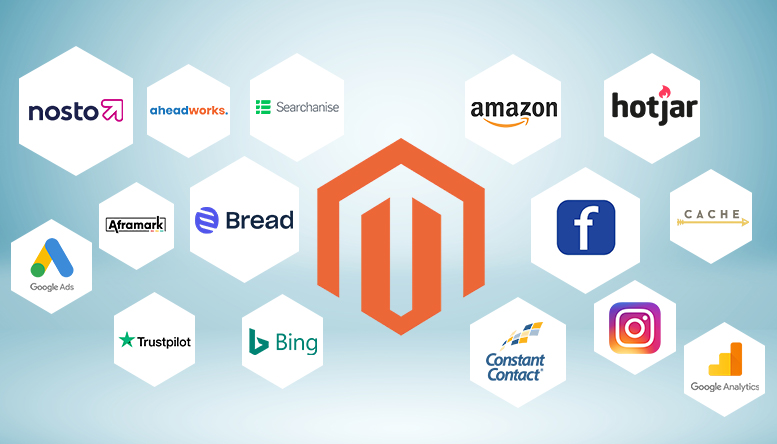
As much as Revo America team wanted to view higher revenues and ROI, they also wanted to give their customers a personalised shopping experience. A successful marketing strategy always keeps the needs of end consumers in check. When it comes to providing customised shopping recommendations, there is no better extension other than Nosto. It collects and analyses various real-time data points on the website and seamlessly devise the most relevant up-sell and cross-sell product recommendations for each customer at the right times. With this extension Revo’s website guides its customers strategically for an uplifted shopping experience and captures customers who might have otherwise exit from the website and encourage customers to buy more rather than just looking at a single product.
When onsite shopping experience is frictionless, your customers are more likely to make a purchase. Revo wanted to maximize their website usability and empower customers to find their perfect products faster and without much effort. Searchanise provides Revo ‘s site with a powerful auto-complete search bar and a relevant search results page that is populated instantly without any delay. It’s advanced search algorithm has the capability to learn from customer queries and offer personalized search suggestions based on previous search history.
In addition to providing professional customer support, it is essential for any online business to come up with creative solutions that allows their customers to interact with each other. Aframark is the most unique and affordable solution in the market to cater to this eCommerce requirement. With this cloud-based platform, all customer questions and answers are syndicated in real-time on Revo website. This extension not only provides instant authentic answers to Revo’s customers but also help in driving more traffic to the website and improve SEO due to the likeability of Google for original UGC (user generated content). Aframark includes an unmatched moderation algorithm that filters every question & answer to detect potential profanity and spam in more than 100 languages. It’s a win-win-win for Revo team, it’s customers and search engine rankings!
The buy now, pay later trend in online shopping is fuelling the future of ecommerce. On Revo, customers can overcome their cash flow challenge and choose to pay for their orders with flexible instalments over time that may fit their budgets more comfortably. The complete payment amount is funded to Revo’s account in full upfront and all the risk and periodic payments are handled by bread platform. With this financing options, Revo gains the opportunity to drive growth and maximize their conversions.
Just like word of mouth plays a crucial role in the success of brick-and-mortar shops, online customer reviews are essential for the popularity of online businesses. Gone are the days when you mindlessly scroll through a website and try to access if their products are any good. Revo’s exceptional products and customers service are showcased in the search results with Trustpilot’s star rating. Trustpilot maintains its reputation for providing authentic reviews which ensure transparency and consumer’s best interest. Even before clicking to go onto Revo’s website, a potential customer is convinced that it’s a genuine and trustworthy business.
Even the smallest improvements on the checkout page could offer a significant impact on the conversion rate. For this, streamlining the checkout page is always essential for Revo and simply providing the ‘proceed to checkout’ button was not enough. So, we went ahead to make Revo’s checkout page user-friendly and intuitive with Aheadworks’s one step checkout extension. This solution simplified the checkout process by eliminating excessive steps, speed up conversions, optimized checkout for mobile users and improved conversion rates.
With Google analytics, the store owners gain a standardised setup and insight into how their website and products are performing. It helps to track sales performance and know how much time a website visitor tales to complete a purchase. However, Revo team wanted to dig deeper which is possible with Google analytics enhanced ecommerce enabled. GA enhanced ecommerce charges up the impressions and transactional data in addition to providing with new metrics and dimension in the reporting. For checking website performance for revo we now make use of ecommerce reports such as shopping behaviour, checkout behaviour, product performance, sales performance and product list performance reports.
Google adwords allows store owners to bid for top keywords and compete to get their ad shown in the top search positions. The ads shown are charged of pay per click (PPC) basis. Although the ads are paid, however these qualify for sending the most targeted ads back to the website. This integration allows Revo marketing team to focus specifically on people who are searching for video surveillance equipment similar to their own products. PPC ads deliver quick, straightforward results with detailed report so fall ad campaigns.
As Bing is the second most used search engine in the United States after Google, so Revo team didn’t want to ignore it at all. Bing webmaster tools is a dashboard that allows to monitor the overall health of a website, see which keywords you rank for on bing, check how your site is crawled and indexed, monitor and resolve potential errors. All these features allowed Revo team to make adjustments and gain better rankings on bing.
With hotjar integration, Revo team analyzes how website visitors interact with webpages, where specifically the visitors face issues on the pages, and why they are not converting. Hotjar is a behaviour analytics and feedback service that complements the insights and data obtained from Google analytics. Hotjar procures user behaviour through tools such as heatmaps, surveys and session recordings.
This integration allows Revo team to sync customer data between constant contact and their website. The benefit of this integration is that the contact lists are always up-to-date on constant contact and Revo team is always all ready to send their next promotion to all available contacts at any given time. This also allows to benefit from contact segmentation. For example, there are separate contact lists maintained for dealers ad regular customers which helps to send targeted email campaigns.
- Facebook & Instagram Re-marketing
Retargeting ads allow to remind potential customers of their previous visit and encourage them to finish their intended purchase. This integration analyses revo’s website visitors and helps to target such customers which in turn increase conversion rate and minimize abandoned carts.
- Amazon Product Feed
Amazon product feeds helps to grow sales and increase conversions. With this integration, Revo team can quickly create an unlimited quantity of custom feeds compliant with amazon’s requirements. It also helps to conveniently track and manage all the feeds.
- Loyalty Program
This custom extension allows to incentivize customers with reward points . Revo gives its customers with reward points for account sign up, email subscription, making purchases and product reviews. Loyalty programs helps to boost revenue, increase registered user spends, and increase buying frequency.
- Varnish & Redis Cache
All website visitors expect to view all of webpages with the minimum loading time possible. If a websites takes longer time to load the content, it negatively affects both user experience and website SEO. To minimize loading times, Revo website is integrated with web caching servers – varnish and redis to speed up the website on both the frontend and the backend. Varnish detects device type and provide device specific services in addition to allowing modification of cache control headers. Redis offers a vast variety of data structures to meet specific store needs and is a great choice to minimize data access latency, ease the load and increase throughput. Redis enables easy scaling for higher loads without growing the costlier backend.
RESULTS
Revo America have used Axtrics eCommerce to continuously incorporate the latest innovations since their launch. With their digital B2C capabilities, Revo America is able to manufacture their products in house, effectively source and track inventory, and facilitate smooth eCommerce operations with Magento Commerce. Here are some of the impressive statistics Revo team has seen after launching their website on Magento commerce:
- $7.2 million revenue generated online
- Over 1 million sessions since launch
- More than 650K new users
- 30% of users acquired from organic search
- Average session of about 4 minutes
- About 4 pages per session
- Over 11.5K transactions
- Google quality score of 10/10 for top keywords
- SEO score of 89/100
ABOUT AXTRICS ECOMMERCE
We are an authentic eCommerce design and development team. Our deep understanding of Magento Commerce allows us to serve as a one-stop-shop for all of your eCommerce needs. We have architected, built, and integrated Magento systems for businesses of all sizes. To learn how we can help with your next Magento project, email us at [email protected] or give us a call at +1 (888) 907-0710 (US)/ +91 9596616161 (India)
There are various factors to ponder about while designing an eCommerce website. So to help you buckle down, we’re sharing some website design best practices that will help you produce a unique and engaging purchasing experience for your customers.
Before launching any website, we make sure that the websites of our clients follow the below-written website design best practices:
- Display your UVP on the home page
- Place the primary content above the fold
- Compress pictures to enhance page load time
- Put a limit text on product pages
- Optimize your design for mobile
Display Your UVP On the Home Page
Draw first-time visitors and retain existing customers by showing your unique value proposition (UVP) on your home page. There is a lack of patience in customers, and they want to learn immediately how a brand will serve them. So make sure that your UVP answers the below-written questions so that your customers get hooked the next they visit the home page:
- What does this brand sell?
- How much will it cost shoppers?
- What value does it provide?
Think out of the box while drafting content for your UVP. And keep in mind to keep it short yet engaging. You can make it eye-catching by utilizing contrasting colors and a right-sized font.
Place the Primary Content Above the Fold
You’re must be wondering what is regarded “above the fold.” Well, it refers to the topmost 600-800 pixels of a page − or the main top part that you notice before you start scrolling down. The content in this section is quite essential and helps in enticing individuals to engage with your website.
We suggest keeping the most relevant content above the fold. Brands usually incorporate a UVP with a distinct call-to-action (CTA) above the fold. Even though there is room for more, keep the top section of your website pages’ clutter-free.
Compress Images to Enhance Page Load Time
Increasing page load times is an essential factor while optimizing your website for SEO and building a positive user experience. HubSpot states that the first 5 seconds of the page load time has the highest impact on the rate of conversion, and our reference point has shown that 100-200 milliseconds is an ideal page load time.
Before publishing our landing pages and blogs, we compress our images to shave time off the speeds of our page. We recommend all eCommerce brands to compress photographs − especially .PNG files as they’re larger than .JPG files.
Put a Limit Text on Product Pages
Check the text on product pages to dodge cluttered pages and help shoppers concentrate on adding the product to their shopping cart. We suggest you add detailed product descriptions and information that is useful to the customer − and this differs from business to business.
The most significant elements to include on your product pages are the name of the product, variant options available (like shades, sizes, etc.), cost, and a call-to-action (CTA) button. Secondary information (like fabrics used, reviews, etc.) should be put in a collapsible design to avoid clutter.
Optimize Your Design for Mobile
According to a survey conducted by Google, around 59% of people believe that buying on mobile devices is crucial while deciding on a brand or retailer to buy from. We firmly believe in the value of mobile-optimizing eCommerce websites, and there are multiple factors to consider while optimizing your website for mobile devices.
While implementing these best practices for website design, we can’t emphasize enough how much of the revenue you may lose if you fail to optimize your store for mobile. Follow our blog about a few design tips for mobile eCommerce to improve UX to know more about the strategies to mobile-optimize your website.
Summing-up
We believe that these website design best practices will help you to enhance the user experience and build an engaging online purchasing experience for your shoppers. If you are curious about learning how Axtrics eCommerce can help in designing and developing your online eCommerce store, you can communicate with us through the comment section given below. A member of our crew will be in touch!
Building an optimized email marketing strategy is the main component of implementing the inbound methodology successfully. Continue reading to learn about some valuable email marketing tips that will help in personalizing your messaging and driving significant results.
Email Marketing Tips to Optimize Your Strategy
Besides following email marketing best practices, try implementing the below-written email marketing tips to increase your contact list, engage with your audience, and enhance the performance of the campaign:
- Build your email list
- Segment your contacts
- Draft a compelling subject line
- Discover a sending cadence
- Develop relationships
- Personalize emails
- Follow best practices
- Utilize automation
- Use A/B testing & optimize your strategy
- Take advantage of an email marketing platform
Build Your Email List
Instead of waiting for the festival season to build your email list, we suggest businesses focus on building their email lists throughout the year. No matter whether your business is selling goods or services, make sure to offer valuable content to your subscribers.
Valuable content can range from checklists, downloadable eBooks, and webinars to redeem codes, product recommendations, abandoned shopping-cart reminders, and more. Try using welcome offers like a first-time discount during signing up to increase the subscribers.
Also, you can leverage a lead capture tool like a form builder offered by Justuno or Klaviyo that will help you capture new email addresses from your website. Make use of behavioral targeting by targeting the users who have visited a particular page or visited your website x number of times.
Segment Your Contacts
One of the most valuable email marketing tips to follow is segmenting your contact list. It will help you cater to content to various personas of the buyer helping in making your brand more appropriate to your audience.
Sending one-time emails are a thing of the past. So segment your contacts to enhance your inbound marketing strategy. There are several ways to segment your contact list such as by lifecycle stage, coupon enthusiasts, high spenders, loyal consumers, and so much more.
Draft A Compelling Subject Line
The style and quality of a subject line directly impact the open rate of any email. Guarantee a high open-rate by producing intriguing and appealing email subject lines that line-up with the identity of your brand. Follow the below-written subject line best practices to captivate the attention of your subscribers and make them crave to read what’s inside:
- The shorter, the better
- Refrain from using spam language
- Build a sense of urgency
- Ask questions
- Employ personalization tokens
In case you’re trying to gain more abandoned shopping-carts, try implementing these dropped cart subject line ideas to bring more people in and captivate that lost revenue.
Discover A Sending Cadence
Like various eCommerce businesses, probably you’re wondering what the ideal number is when it gets to sending emails. There is no universal thumb rule about building a sending cadence; although, we encourage all businesses to examine the goal of their campaigns.
For instance, let’s assume you want to send out a newsletter per week. If you have ample content to add new things in each newsletter, then probably a weekly newsletter is alright. However, keep analyzing the performance of the newsletter. If you observe a drop in open rate or subscribers, you may like to revise the weekly send and, alternatively, opt for bi-weekly.
Regardless of what your sending cadence is, keep monitoring the performance of your email to ascertain whether you’re sending too frequently (or not enough). Also, keep reminding yourself of the goal behind each email sent, and if you don’t know your goal from the jump, then don’t send any email.
Develop Relationships
As we already mentioned about the criticality of concentrating on building your email list throughout the year. It holds for various reasons − one being that establishing relationships before the holiday season is the key to increasing sales during holidays.
Klaviyo reports that around 60% of Cyber Weekend sales are directed by customers who are engaged with the brand before Q3 that same year. To develop relationships with your leads, prospects, and customers, make sure to observe the data that is in front of you. Have a keen look at:
- Behavioral data − such as time spent on your website, product views, etc.
- Transactional data − such as the quantity bought, money spent, sale vs. full price, etc.
- Email engagement − such as clicks, opens, etc.
Leverage this data to divide your audience into segments and boost offers and content to send them the best emails. Send the right message at the right point in time to the people to develop customer relationships and lead them through the buying process.
Personalize Emails
Don’t hesitate to get personal in your emails! Take advantage of personalized tokens to increase the relevance of your offer and make it more eye-catching. HubSpot enables businesses to personalize content based upon the information from the contact record or company record of the viewers.
Use the first name of a contact, along with its gender, annual revenue, lifecycle stage, lead type, and a lot more to personalize your emails. Add personalization tokens like these in the subject line and preview the text of your emails to produce an individualized user experience and improve the open rate.
Follow Best Practices
Enforcing email marketing best practices is crucial for reaching your targeted inboxes and retaining your contact list. Make sure to insert alt text in images always. If an image crashes to load on the device of the recipient, the alt text translates the image into words for them.
Moreover, utilize attractive calls-to-action (CTA) in your emails. Make sure to apply these faintly as the excess of CTA buttons may confuse the recipient. Be sure to lead them where you desire them to go by creating the CTA button that catches the eye from the rest of the copy and then linking it to an appropriate landing page.
Utilize Automation
Of all the tips regarding email marketing discussed above, we highly recommend you to automate your email works. Email automation helps brands in guiding leads, prospects, and customers through the journey of a buyer by sending targeted messages based upon specific actions.
Create workflows based upon specific registration criteria so that the emails are sent right to the connections that are interested in a piece of content or a particular offer. Then, decide how many emails you want to follow-up with, design and customize the emails, and then schedule them with a set number of days between each email.
Automation saves the time of marketing teams and enables them to “set it and forget it.” Automating your emails is much easier than sending individual emails to every contact in your database. Also, it’s excellent for following up with buyers’ post-purchase.
Use A/B Testing & Optimize Your Strategy
A/B testing helps companies divide individual parts of an email to understand what influences the best outcomes. There are various components to examine within an email, such as templates, subject lines, preview text, design, creative imagery, personalization tokens, etc.
It’s essential to note that while A/B testing, there should be a single variable only that differentiates version A from version B. Make sure to have a large enough sample size so that your outcomes are statistically notable and valid.
Take Advantage of an Email Marketing Platform
If you want to strengthen up your email marketing efforts, we suggest you leverage an email marketing platform, namely Klaviyo or HubSpot. Although there are many other platforms to choose from, we generally recommend these two marketing platforms to our clients due to the multiple features they offer.
Look for the software that offers features such as profile, detailed reporting, segment, hyper-segmentation based upon the behavior of a visitor, URL and location targeting, pre-built autoresponders, and automation.
Summing-up
We hope the above-stated email marketing tips help you enhance your overall strategy, driving more conversions. You can post your thoughts or queries about what’s written in this blog through the comment section given below, and one of the team members will reach you asap.
Optimizing the social media branding strategy of your eCommerce store is essential in case you’re trying to improve interaction and engagement with your audience. You may have thousands or millions of followers on your Facebook page but still might slip to witness growth in ROI if nobody is interacting with the posts shared on your social media page.
The ultimate aim of any social media community is to build consumer trust in your brand. In this blog, we’re sharing some beneficial insights to help in creating an engaging and memorable social media experience for your brand.
Social Media Branding
In case your current social media branding strategy isn’t striking the desired results, then follow the tips written below to increase engagement, customer happiness, and ROI:
- Discover the purpose of your brand
- Pick a voice, character, and point of view
- Humanize your content
- Utilize automation, but not for everything
- Employ analytic tools to gauge activity
Discover the purpose of your brand
Identifying the purpose of your brand is one of the most crucial steps to take before drafting the strategy of your social media branding. In case you don’t know where to begin, start by looking at the mission statement of your company.
Hold the vision of your brand, and think about how you desire your audience to perceive your brand. It will give you a perception of how your brand should represent itself on social media. Keep the objective of your business in your mind while sharing each piece of content on your social media page.
Pick a Voice, Tone & Point of View
After identifying the purpose of your brand, it’s time to discover the tone, voice, and point of view of your brand. Users are swarmed with countless social media ads every day, and we know that it can get hard to shine out from the competition.
Recognizing your audience and making them a member of your brand community proves that your brand is genuine and wins the trust of the customers, turning it into customer loyalty.
Humanize Your Content
Imagine! You’ve stumbled upon a new brand that looks appealing on social media. Their photographs seize your attention, enticing you to look more into the company. But, you tend to lose trust in the brand after noticing that the content seems like it was drafted by a robot.
As consumers, every individual has been there at some point or another. So, instill trust amongst customers by humanizing your content. Humanizing your content, with which the consumers can relate with will open routes for more engagement.
Utilize Automation, But Not for Everything
Although we just emphasized the significance of humanizing your content – that doesn’t imply that you can’t utilize automation! We suggest making use of automation to schedule and post content.
However, when it’s about the comments on social media with queries or concerns from customers, keep in mind to avoid automating your responses. Instead, take the time to respond uniquely to the questions of each individual. Replying individually to each customer make them feel recognized, showing them that your brand cares.
Here at Axtrics, we prefer using Buffer and Bulk.ly to send out and schedule the social media posts automatically. Regardless of the software you use, don’t forget to optimize the content for every post so that your audience can correlate and engage with your brand.
Use Analytic Tools to Gauge Activity
Social media is one of the most widespread channels of communication, with around 97% of marketers employing social media to influence their audiences. Therefore, your social media branding strategy should significantly add to our ROI.
In case you’re not getting the desired outcomes, we suggest investing in an analytics tool to assess your activity. You’ll get an understanding of the performance of your brand, like how well your content is performing.
Wrap-up
Buyers will care about your brand only if they experience the same care from your brand. Prioritizing customers and their different questions, remaining human, and granting authenticity while keeping your goals in your mind add to a great social media branding strategy.
We hope these invaluable insights have encouraged you to optimize your branding strategy! You can expect to notice a subsequent increase in engagement, customer satisfaction, and ROI by following these tips.
In case you would like to know more about how Axtrics can help your business to build an efficient social media branding strategy, you can reach us through the comment section given below. Our team will be pleased to help!
A Feature Rich Upgradefit for Growth
Within a short span of over 12 years, Trading Depot has grown across the UK with an extensive range of products. As the brand continued to grow, it became increasingly clear their current Magento Commerce 1 (formerly Enterprise Edition) site no longer met their requirements. More time was being spent fixing legacy issues rather than implementing new technologies and developing functionalities designed to optimise the customer experience. It was time to update the entire site to reflect their new branding and the new site needed to provide the stability to streamline the customer journey from product page to checkout, ultimately improving online conversions. Another key reason to migrate was that M1 was going to hit the end of life in June 2020, leaving all M1 stores post this date non-PCI-compliant and less secure with no future updates and features. Other key requirements for their new website were to address issues related to shipping charges, product images and reducing abandoned carts. They also wanted to implement CRM and ticketing systems.
It was essential that their new platform functionality supported their continuing expansion. It was obvious that Magento 2 Commerce was the best fit for a number of reasons, namely the scalable, secure and customisable nature of the platform.
Trading Depot chose to work with Axtrics Solution Pvt. Ltd., and started with a discovery session to outline Trading Depot’s goals for their new website. It was essential to start with a comprehensive website audit to pinpoint additional UX, design and technical challenges that might not have been obvious from a user perspective. Using their findings, Axtrics detailed an outline for the project and broke it down into key phases with corresponding timelines and milestones. With the end goal of improving the customer journey, we designed a bespoke website that reflected Trading Depot’s new branding and better accommodated their customers according to online buyer behaviour data.

Once the new custom designs were signed off by Trading Depot, it was time to start building the new website and the first step was to focus on resolving historic SEO and backlink issues from previous migrations and rebuilds to ensure all legacy issues weren’t carried over to the new site. To maximise the customer journey, the entire site navigation and site map was restructured according to keyword research and popular product recommendations.
Magento’s vast ecosystem enabled the site to be more stable and drastically improved the overall customer experience. Using Page Builder, a feature on Magento Commerce version 2.3, dynamic pages were created to showcase Trading Depot’s product offering. Page Builder enabled richer shopping experiences, greater flexibility for marketing, and simplified the day-to-day upkeep of the CMS pages thanks to the user-friendly drag and drop functionality.UX & UI is the key for better conversion, so we focused on each element’s importance & placement according to the viewport and we delivered separate themes for Desktop & Mobile.
There were few challenges in the migration like wrong attribute sets, incorrect attribute mappings, duplicate URLs, redirects etc. and since the catalogue was nearly 100K so it was very difficult to correct data related issues. But after working closely with Trading Depot we were able to correct the data using strong algorithms.
A Bespoke Experience Enabled By Effortless Content Management
Trading Depot also chose from a wide selection of third-party extensions on Magento’s Marketplace, including BSS Commerce to place labels on the product images, Elasticsearch® by Magedelight to provide customers the most accurate and quick search,Frequently Bought Together by Mageplaza, Mass Product Import & Update by Wyomind, Order Export by XTENTO, Checkout.com API to add checkout.com payment method, Nosto to add personalized product
recommendations, ShipperHQ for shipping rates management as well as Facebook Pixel by Apptrain to track conversions from Facebook ads.
In addition to the above mentioned third-party extensions Axtrics also created custom extensions for Trading Depot which would help them in sending canned responses, displaying MegaMenu functionality, adding categories & brands on the homepage, adding blocks inside checkout page, sending emails, modifying “Sort By” option on catalog pages, and many more.
Faster Page Loads, Faster Checkouts, Fantastic Experiences
The new Trading Depot website went live in June 2020. Magento 2 Commerce gave them the stable platform they desired, as well as decreasing page load time by almost 50% and streamlining the customer journey from landing on the website to checkout. The results speak for themselves with conversions up by 10.3%, transactions up by 22.9%, average order value up by 6.4% and reduction in cart abandonment by 40%. As a result, Trading Depot have seen a 11% increase in revenues in less than 2 months. The Trading Depot team are spending less administrative time managing their pages thanks to Page Builder. They no longer need to wait for their development team to update content or create new landing pages. This allows their team to focus on providing their customers with the best experience possible and continue to expand.

Page load time is always crucial and makes a high impact on conversion. After the migration we were able to successfully deliver a site which loads in less than 2 seconds using best Magento practices, server caching, highly tuned server environment etc. The Trading Depot team found that the performance, usability, and maintenance of the new site surpassed their expectations.
So, you want to turn more website visitors into your customers? Building an exclusive and seamless online purchasing experience is the key to driving conversions, and enhancing the layout of your eCommerce website − specifically improving your product pages − will place you one step closer to achieving this goal.
Product Page Design Tips
Design product pages with a high-convertibility and intuitive purchasing experience for your shoppers by following the below written best practices to design high-converting product pages:
- Utilize crisp product photography
- Mobile-optimize your product pages
- Show the product in use whenever applicable
- Give detailed product descriptions
- Showcase reviews of previous customers
Utilize Crisp Product Photography
While creating the design of your product page, it’s essential to keep in mind that the product is the first thing customers will be looking at − and that’s what the product page is all about! Attract the eyes of your users’ to your product with crisp & high-quality product photography.
Users arrive on your product page in search for quality and usefulness in your product before purchasing your product. Show them that value by improving the design of your overall website, and generate a sense of trust and confidence by capturing your products in the most favorable light.
Mobile-optimize your Product Pages
Convert more users into customers by optimizing the design of your eCommerce website for mobile devices. As there’s little room for your product information on a mobile screen, we suggest all eCommerce stores implement the below-written tips for optimizing a product page design for mobile devices:
- Put a limit on the text of your product pages to avoid cluttering and ensuring a positive user experience.
- Identify the thumb zone or the area where it’s most convenient for the users to touch with a thumb.
- Use easy navigation so that the shoppers can smoothly navigate through the menu to the store.
Utilize sticky CTAs to make it easier for customers to add products to their shopping carts.
For added details on these tips, check out our blog on the Mobile eCommerce Checklist to make sure your product pages, checkout, and more are mobile-optimized.
Show the Product in Use Whenever Applicable
According to HubSpot, around 73% of people are more inclined to buy your product after viewing a product video. Make use of product videos in association with stellar product photography to display the usage of your products and convert more traffic.
Begin by selecting a genre that suits the best with your offer, like:
- Highlighting the features of the products
- Comparing your product with that of your competitor
- Creating a desirous lifestyle
Sometimes while an individual is on the verge of making a buying decision, a product video is an asset to seal the deal. Stimulate your creativity by leering how the above-written eCommerce product videos can drive product page conversion.
Give Detailed Product Descriptions
As we stated earlier, a mobile-optimized product page should have defined and limited text. However, it’s a best practice to make use of detailed product descriptions in the design of your product page. Make sure to draft product descriptions that are easily accessible to the website visitors on both desktop and mobile devices to create a seamless user experience.
Add informational details, such as the ingredients, materials, etc. comprising your product. Also, instead of listing the product features, emphasize the benefits to show the value of your product fulfilling the unique needs of the customers. Besides, motivate users to buy your product by adding social proof, which drives us to our next best practice.
Showcase Reviews of Previous Customers
Showcasing social evidence such as social sharing buttons, customer reviews, and tickers will tell the new users that previous customers were happy with your product. Build consumer trust by displaying this third-party credibility.
In case a visitor browses a product review from an individual whose story sounds like theirs, then they’re more likely to purchase that product. Also, why would you not want to flaunt your happy customers?
Just be careful about the number of customer reviews on your product pages because you also don’t want to rattle the customer with excess text. We suggest displaying 3 to 4 reviews and then employing a dropdown button for the users to read more.
Wrapping up
We hope you will consider these best product page design practices while creating the layout of your eCommerce website. Generate a positive user experience, converting more visitors into shoppers with visually engaging and easily navigational product pages.
You can explore Axtrics eCommerce’s website services or contact us through the comment section given below with any queries, comments, or concerns. Our team will contact you soon!
Would you prefer watching a 20-second video clip or reading a one-page summary? The video has become the chief source for absorbing information in today’s world overloaded with information.
With all this information quickly accessible with our fingertips, the attention spans and patience levels of the customers tend to lessen while consuming or awaiting to consume content.
Advantages of Product Videos:
Encourage product page conversion and build the trust of your consumer by showcasing videos on your product pages and posting them on social media. This digestible content keeps the interest and engagement of your customers, one of the several benefits of leveraging product videos.
Below are some of the ways how eCommerce businesses can gain using product videos:
- Get your message across faster
- Highlight product features and details
- Build consumer trust and brand credibility
- Give information and value
- Share across multiple platforms
Get Your Message Across Faster
Visual content is crucial in this modern world of marketing as it provides a medium that takes your message across faster. Video gives a visual of the product and appeals to your audience’s different senses, which translates into a stronger perceived value.
Although eCommerce product photography is efficient on its own, online customers can make a buying decision faster by viewing your product videos (rather than scrolling through all of your product pictures.)
Highlight Product Features & Details
eCommerce businesses selling strictly online miss the boat to provide their shoppers with physical inventory to touch before initiating a purchase.
To help shoppers get a feel for an article they’re interested in, you can make use of product videos to highlight the features and details that an image might’ve missed. Or you can highlight any main components that distinguish your product from the competition.
For instance, if a commodity has a tiny zipper or button that is difficult to see in a product picture, or if you want to display the product in use, using videos can help your customers see everything before purchasing.
Build Consumer Trust & Brand Credibility
Build the trust of your consumers by making product videos highlighting or demonstrating every aspect of your product. It’ll instill your customers’ trust in your brand, showing the credibility of your store.
Utilizing only low-quality photographs of the product may make some buyers question the legitimacy of your store. Avoid these doubts by adding videos on your product pages so that the customers feel secure while purchasing before checkout.
Give Information & Value
Give the essential information and show the buyers the value and importance of your items in your product videos. Try correlating your products with each other and analyzing all features to help customers see how they’ll profit from using it.
Comparing products is an excellent cross-selling strategy as it introduces visitors to several other products at different prices. Also, it helps them in deciding which item suits their needs the best. If that happens to be over one single product, then congratulations − you’ve just improved the average order value.
Share Across Multiple Platforms
Search new audiences, improve reach, and make extra sales by boosting buyers to share your product videos on multiple social media platforms, like Twitter, Instagram, Facebook, and Pinterest.
Keep in mind to post your product videos on social media platforms when required! If you’re running a holiday promotion or a giveaway, then sharing your product video is an excellent way to generate customers’ interest and increase visibility.
Wrap-up
When it comes to adding product videos into your marketing strategy, an essential thumb rule is to generate content with a purpose. Do not just produce content just for the sake of producing it.
To help you produce purposeful content, we suggest you learn about the personas of your buyers so that you can fully provide to your various customer segments. The key to driving online sales is sending the content at the correct time during the journey of a buyer.
Are you looking for any help with the development or marketing of your eCommerce website? Reach us with the comment section given below with any questions or concerns, and our team will get in your touch!
As stated by HubSpot, Facebook is the primary channel for content distribution for marketers today. With the predominance of social media in today’s life, Facebook offers an enormous opportunity for businesses of all types to promote their products and services and obtain new shoppers.
Through this blog, we will dive deep into Facebook lead generation, helping you to customize your ads and draw more leads on FB.
Facebook Lead Generation: What Are Facebook Lead Ads?
Lead generation is the method of converting prospects into leads and guiding them into the sales funnel. However, people finding it difficult to learn more about your brand while interacting with your ads on mobile can result in some business loss.
Draw interested prospects by making sure mobile optimization and using Facebook Lead Ads. The interactive ads lead users through the sales funnel with a few clicks. A form pre-populated with contact information pops-up when a prospect taps on the Facebook ad.
Users are more likely to fill out and submit the pre-populating form incorporating essential contact information, resulting in lesser drop-offs. After the submission of the “Instant Form,” the person gets the information they are searching for, and your business receives their information − converting them into a lead.
Customizing Lead Ads
From subscribing to email lists to registering for various events, Facebook lead generation advertisements are excellent for numerous circumstances. Reach the top of your funnel goals, such as improved visibility and brand awareness, by optimizing the advertisements to fit the needs of your business.
Whether you want to optimize your commercials for higher-quality leads or follow up quickly with someone, the customization features of Facebook provide for it.
Quick Follow Up
Make sure your brand is contacting the right people by adding custom queries to your ads. While formulating these questions, businesses have the option to select how they want to receive their answers, like:
- Multiple choice
- Conditional
- Short answer
- Store locator
- Appointment request
Further customize by utilizing dynamic ads to display several products, scale your creativity, and encourage your users to provide their information. Improve your creativity and messaging to retarget users who have previously shown interest in your products or services. To know more about retargeting, check out our blog on Facebook ad targeting tips.
Optimizing Ads for Higher-Quality Leads
Your ads must be the best quality to generate leads of higher-quality. Add a CTA button, like “Call Now” or “Shop Now,” to accelerate leads through the journey of a buyer.
Instead of following up with every person submitting a form, use appointment scheduling to allow people to choose the date and time that serves them the best. It will save the time and effort of your team and make it more likely for your shoppers to contact you.
Lastly, customize your ads for the customers of high-intent by requiring higher-level form fields, like a review page. It will check uninterested or unqualified leads from submitting the form and, alternatively, help your business winning leads having a strong inclination to your brand.
Advantages of Lead Ads
Utilizing Facebook ads to increase revenue is a profitable asset for various businesses and industries − especially the automobile industry, B2B businesses, educational institutions, and consumer packaged goods firms.
We encourage firms in the auto industry to take advantage of Facebook’s dealer locator, which enables your leads to find a nearby dealership and set up a date and time for a test drive that works for them − all within your advertisement.
In case you’re in the education industry, make use of customized questions in your advertisements to create various forms for the different classes and programs offered. It will help in determining the topics of your leads’ interest.
If you trade B2B, add a bold CTA like “Talk to an Expert” or “Call Now” so that your leads can reach you directly and quickly. And, if your organization trades in consumer packaged goods, make sure to display products that are relevant to your audience and give them the option to sign up for emails or ask for a sample.
Lastly, one of our favorite advantages is that new leads can directly sync with your CRM, equipping your sales team with all the data they need to get to your leads. Also, businesses can utilize Facebook pixels to track lead conversion results on their websites.
Wrap-up
Keep in mind that while creating your FB lead generation ads, the creativity and messaging that you employ should always reflect the personality and voice of your brand. There is a slew of Facebook advertising formats available, so we suggest carrying out some research to comprehend which is best to help your business flourish.
Need assistance with your eCommerce advertising or marketing? Axtrics is here to help you to increase your ROI with paid media. You can tell us your queries or concerns through the comment section below, and our team will help you resolve it.
What used to be a never-ending feed of photos has transformed into a sphere of endless ROI potential for businesses. Instagram eCommerce is one of the most reliable ways to boost exposure, conversions, and brand awareness.
Instagram Best Practices
Whether you’re a brick-and-mortar or an eCommerce store retailer employing Instagram in your social media strategy, make sure to follow the following Instagram best practices to retain users at every phase of the buyer’s journey, drive added organic traffic, and improve sales:
- Share useful content
- Follow your followers
- Make use of hashtags to improve visibility
- Repost and engage with user-generated content
- Link to product pages with product tags
Share Useful Content
Every video, photo, and the story that you share on your Instagram account should have an objective or purpose − whether be it advertising a new product launch, giving discount codes, showing behind-the-scenes, etc.
Consider the personas of your customers to make sure that you’re catering to their changing needs before posting content. Instagram is a unique social media platform compared to others in that it allows businesses to tell a story with photos.
Follow Your Followers
We highly support all eCommerce brands to follow back their followers. It will convey a sense of community to your followers and indicates that you care about them.
Besides, following a follower back on Instagram enables you to view their entire profile, helping you to create a better user experience for that follower. By enhancing their social media experience and building trust within your brand, you’ll drive that prospect into a lead much faster.
Make Use of Hashtags to Increase Visibility
Use hashtags in the captions of your stories, posts, and IGTVs to improve the visibility of your product and brand. That way your Insta posts will be visible to your users when users search for hashtags on the Explore Page of Instagram. Additionally, Instagram now allows users to follow hashtags, providing a better opportunity for your brand to get visible by your target audience.
Add only relevant hashtags, as inappropriate hashtags will make your posts resemble spam. Although Instagram will provide a cluster of random and irrelevant hashtags, we strongly suggest dodging this at all costs as it won’t bring relevant traffic to your page.
Repost and Engage with User-Generated Content
As we have already said, Instagram is a great social media platform to showcase their stories with visual content. It’s also an exceptional platform for users to show the usage of your brand’s products or share their experience with your brand.
User-generated content (UGC) refers to the content associated with your brand that is shared or posted by your followers, consumers, or anyone unaffiliated with your business. Some examples of UGC incorporate bloggers posting their favored product recommendations and happy shoppers posting their latest purchases.
Reposting UGC creates a sense of association and develop brand loyalty. Once your followers start getting noticed by your brand, it makes them feel valued. Also, reposting UGC indicates a “lifestyle” that may attract other people taking a look at your brand.
Another example of UGC is the product (or services) giveaways. Improve visibility and brand awareness by running a giveaway that asks users to like your post, comment on it, and share it in their stories to enter the race to win. It’ll help your brand to get in front of your followers’ followers and get more organic traffic.
Link to Product Pages with Product Tags
Boost conversions by guiding users from the Instagram post of your brand to your product pages. It works only for Instagram approved business profiles, so be sure to get your page approved while creating your account and business profile.
Linking your posts to your products makes it one step simpler for users to navigate to your website. Instead of having to click the site link in your Insta bio and scroll throughout your website to obtain a particular product, users can click on the product tag once and get directed to the product page for the detailed information about the product.
Besides, Instagram gives you the option to show the price too in the product tag. It enhances the user experience by letting the buyer know the cost of your product.
Wrap-up
Whether you’re just beginning with a social media branding strategy or are working to increase your online presence, we suggest all businesses follow the above stated Instagram best practices. As it’s apparent that Instagram is one of the best and most popular social media platforms for visual appeal, so make sure to use product images of high-quality while posting content online.
Got any questions or want to learn how Axtrics’ marketing services can help get more customers for your eCommerce store? Get in touch with us by putting your concerns or queries in the comment section given below.